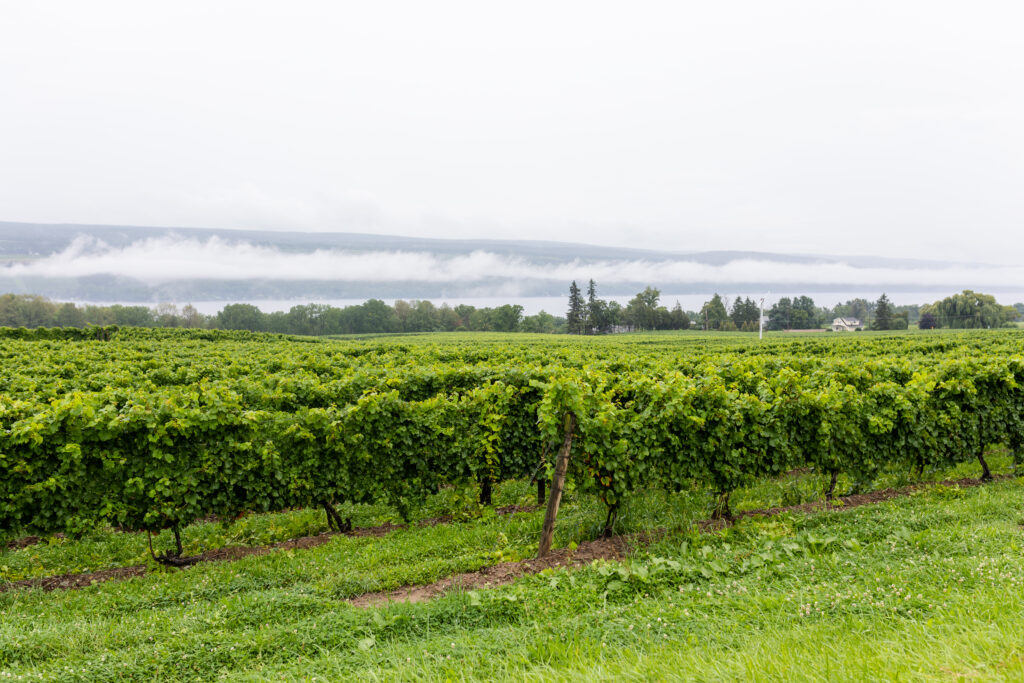
The New York Wine & Grape Foundation (NYWGF) is calling on grape growers, winemakers, and industry partners across the state to help shape the future of research that drives innovation, sustainability, and competitiveness in New York’s wine and grape industry.
Each year, NYWGF’s Research Committee—comprised of members of our Board of Directors and informed by stakeholder feedback—identifies priority research themes that address the industry’s most pressing challenges and emerging opportunities. These priorities guide the selection of funded projects in viticulture, enology, business development, and other specialized areas.
Your voice matters. By sharing your perspective through our short survey, you directly influence how NYWGF allocates research funding for the 2026-27 program year. The resulting projects—whether they focus on vineyard sustainability, wine quality, pest management, or evolving consumer trends—are designed to deliver practical solutions and lasting impact for New York producers.
“Our Research Program only succeeds when it reflects the real-world needs of our growers and wineries,” said Sam Filler, Executive Director of NYWGF. “Industry input is critical to ensuring that we fund the most relevant, actionable, and forward-thinking projects. This is your opportunity to help determine where those investments are made.”
Proposed Priority Research Themes for FY26-27
Key areas under consideration include:
Viticulture: Innovative disease and pest management strategies, vineyard floor and weed management, mechanization, soil health, sustainable nutrient use, and performance evaluation of new cultivars and clones.
Enology: Improving wine quality from hybrid and native grapes, sustainable winery operations, advanced wine microbiology, and efficient analytical methods.
Business Development: Understanding Millennial and Gen Z wine preferences, leveraging technology to improve efficiency, and increasing consumer awareness of New York wine’s diversity and quality.
Other: New value-added grape products, including sustainable uses for grape processing byproducts.
A full list of proposed research themes is available below!
Survey responses must be submitted by Tuesday, September 30, 2025. Click here to share your feedback now →
Once finalized, the FY26-27 research priorities will be published in NYWGF’s Request for Proposals, which will be released to the wine and grape research community in late December.
Research Themes
VITICULTURE:
- Disease & Pest management, including Invasive species: Develop effective, efficient and sustainable disease and pest management materials and techniques that minimize development of resistance and provide resilience to climate change. Develop management approaches to combat impact of invasive species, including but not limited to spotted-wing drosophila and spotted lanternfly.
- Floor and weed management: Develop and evaluate vineyard floor and weed management strategies to reduce energy and herbicide use.
- Mechanization and precision agriculture: Identify opportunities for vineyard management mechanization and application of precision agriculture technology with a particular emphasis on the development of labor-saving and affordable canopy management equipment.
- Sustainability: Develop and evaluate vineyard management strategies to efficiently utilize nutrient inputs and promote long-term soil health and water quality.
- Grape cultivars and clones: develop or evaluate the viticultural performance of grape cultivars or clones suitable for the production of quality wine, juice, or bunch grapes in New York’s diverse viticultural regions.
ENOLOGY:
- Grape cultivars and clones: Evaluate the potential of new grape cultivars and/or clones for quality wine production in New York’s diverse wine growing regions.
- Wine quality: Develop and evaluate techniques and/or methods to improve the quality of wine made from interspecific hybrid and native grape cultivars.
- Sustainability: Develop and evaluate sustainable winemaking practices, including efficient wastewater management, energy reduction, and means of reaching carbon neutrality.
- Wine microbiology: Identify opportunities for improved wine quality or processing methods related to wine microbiology, including regional microbiomes, microbiological bioprotection, and fermentation nutrition.
- Wine analysis: Develop or improve the efficiency of wine analytical methods designed for use in production.
BUSINESS DEVELOPMENT:
- Evolving Consumer Preferences: Identify and research generational preferences of millennial, gen x and gen z consumers (authenticity, sustainability, and experiential marketing) and most effective ways for New York Wines to establish themselves with this key demo and build a relationship with them.
- Technology Advances: Evaluation of the best tools for wineries to streamline operations, enhance customer experience and gain a competitive edge in marketing, sales, compliance & operational efficiencies.
- Customer acceptance: Identify and test education and communication strategies to promote customer acceptance of wines made from cold hardy hybrid and native grape varieties.
- Customer awareness: Identify and test education and communication strategies to increase customer awareness of the diversity and quality of New York wines.
OTHER:
- Non-fermented value-added grape products: Identify or develop new value-added grape products that promote sustainability and/or human health, such as valorized waste from grape processing.
- Newsletters: Veraison to Harvest etc.