
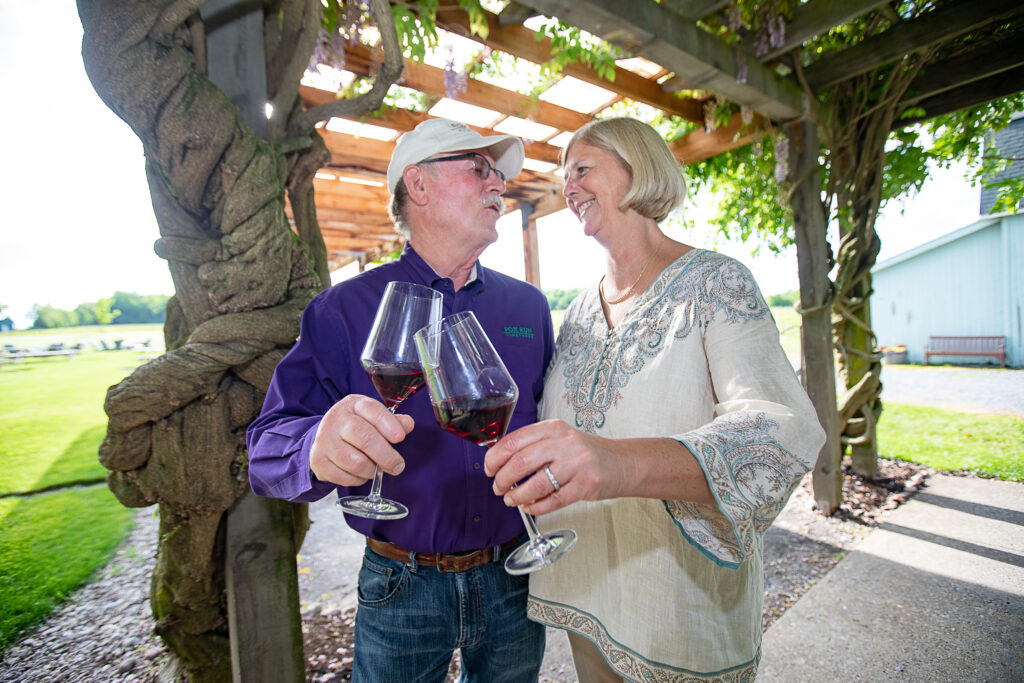
In 1984, Scott Osborn returned home to the Finger Lakes for the holidays and stopped at a local winery on a whim. The final visit of the day, Wagner Vineyards, would change the course of his life.
“I tasted their 1982 Chardonnay and it was fantastic,” Scott recalls. “It was an epiphany. I thought to myself, this is the kind of wine I want to make and drink.”
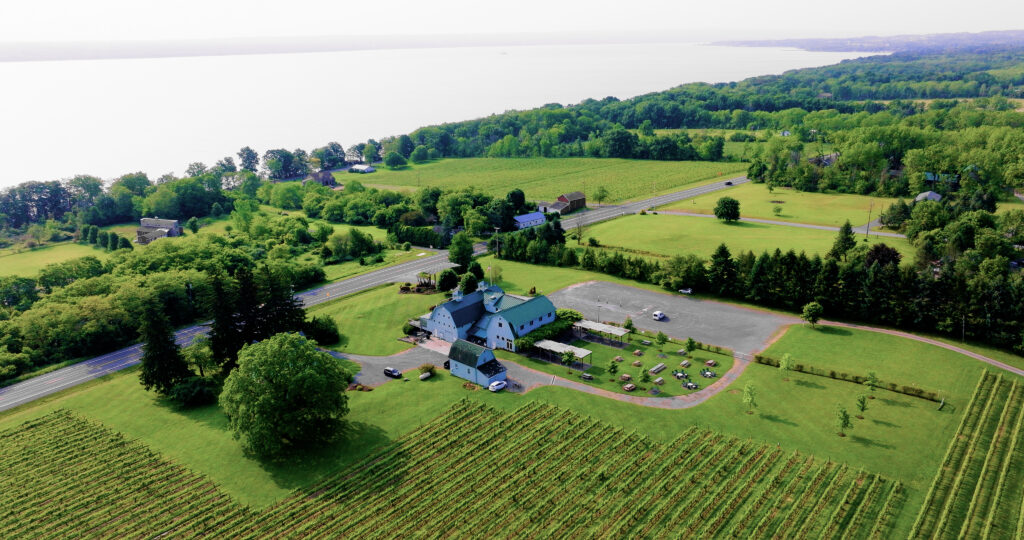
At the time, Scott was working at Zaca Mesa Winery in California, but that single sip inspired him to pack up and move back to New York in 1985. Less than a decade later, in 1993, he purchased Fox Run Vineyards, which was established in 1990, on the western side of Seneca Lake and began what would become a decades-long commitment not only to winemaking but to reshaping how the world saw the Finger Lakes.
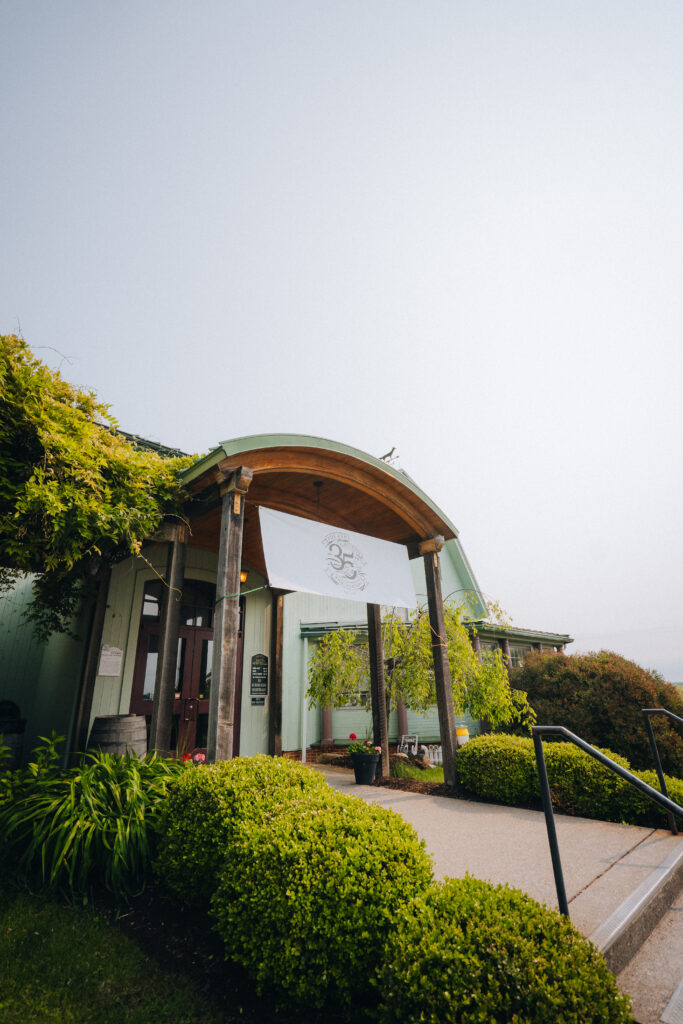
This year, Fox Run celebrates 35 years in the heart of New York’s wine country. And while the landscape has transformed dramatically, from a fledgling frontier to a globally recognized region, Scott’s mission remains the same: make great wine, protect the land, and lift the industry as a whole.
Building a Winery and a Region
When Scott first started, he made just 1,000 cases of wine a year; the region was still emerging.
“We were all trying to figure things out. All of us were trying different things in the vineyard, investing in new technologies, just trying to understand the unique character of the Finger Lakes,” he says.
But he knew early on that success wasn’t going to come from individual ambition. It had to be a collective effort. “We all shared information,” he says. “Because most of us believed it wasn’t just about our wineries, it was about the reputation of the region.”
That collaborative ethic was formalized in 2001, when Scott and Fox Run’s longtime winemaker Peter Bell co-founded the Winemakers Tasting Group. “We wanted a space where Finger Lakes winemakers could meet every two weeks to taste wines from around the world and share their own works in progress. No writers, no owners, just a safe space to talk about what worked, what didn’t, and how we could all do better.”
Those kinds of conversations laid the groundwork for a regional renaissance.
From Underdog to Global Player
In the mid-1990s, selling Finger Lakes wine outside of the tasting room was an uphill battle. Scott vividly remembers that “in 1997, I sold more wine to restaurants in Napa Valley than I did in Penn Yan.” This just shows what it was like back then, and it took years of footwork, patience, and persistence to get local restaurants and retailers to carry regional wines.
Today, Finger Lakes wines are on many local Finger Lakes restaurant menus and on the lists of restaurants in New York City, Boston, Chicago, and beyond. “We’ve gone from being an unknown region to one that’s recognized worldwide as one of the top regions in the world,” Scott says. “We see people from all over the world who come to taste and drink our wines. One of my neighbors, who is able to track his visitors, had people from 32 countries visit their winery last year.“
He continues, “We have our own unique terroir. We make wines that taste like this place. Our glacial soils and our cool climate create something you can’t find anywhere else in the world. We need to celebrate that. Be proud of what we’ve built.”
A Philosophy of Sustainability and Stewardship
From the beginning, Scott’s vision for Fox Run included more than just great wine; it included caring for the land that makes it all possible. “When I bought the winery, I vowed to return the land in better shape than when I got it,” he says.
That mindset has long guided the vineyard’s operations and, in recent years, earned Fox Run a designation as a Certified Sustainable Vineyard through the New York Sustainable Winegrowing Program. But for Scott, sustainability is personal, not performative.
“We have such unique and different soil types, old paleo lake shorelines and paleo deltas,” he explains. “If we don’t take care of the land, we lose what makes our wines distinctive.”
Equal Attention, Exceptional Wine
When it comes to winemaking, Scott is deeply involved in the process, even if he isn’t the one behind the tanks. “I always believed that everyone should drink wine. That’s why, from the beginning, we made sure that our proprietary blends, our house wines, got the same amount of winemaking attention as our reserves.”
That respect for quality across the board paid off. In 1997, Fox Run’s 1995 Pinot Noir earned the Governor’s Cup. In 2008, Wine & Spirits Magazine named Fox Run one of its Top 100 Wineries for its 2006 Reserve Riesling. In 2013, a collaborative wine between Fox Run, Anthony Road, and Red Newt – Tierce Riesling – was served at President Obama’s second inaugural luncheon. In 2025, Fox Run Vineyards earned a series of prestigious accolades across multiple wines.
Their Semi-Dry Riesling was honored with the IRF Trophy for Medium Sweet Rieslings, in addition to receiving a Triple Gold and Best of Class at Dan Berger’s International Wine Competition. VinePair, one of the industry’s most respected voices, recognized two of our wines among their annual top lists – naming their Cabernet Sauvignon as one of the Top 30 Cabernet Sauvignons of the year, and their Dry Rosé as a Top 30 Dry Rosé of 2025.
Rounding out the honors, the 2022 vintage of our Unoaked Doyle Family Chardonnay was awarded Best of Class Unoaked Chardonnay at the 2025 Finger Lakes International Wine Competition.
Hospitality at the Heart
While awards matter, Scott says what truly drives him is the people. “I’ve made lifelong friends through this work, winemakers, customers, and visitors from all over the world. That’s what I love most.”
Inside the tasting room, he ensures his staff are fully trained on the wines, but he believes hospitality goes beyond knowledge. “I tell them: ‘I can teach you everything about the wine, but it’s up to you to bring the smiles. You’re here to help guide each guest’s experience, and to make sure they feel welcome.”
Over the years, Fox Run has adapted to changes in visitor behavior, offering everything from casual tastings to deeper educational experiences. “We’ve seen people come in wanting quick sips, and others wanting to sit down and really connect. Our job is to meet them where they are and make them want to come back.”
Looking to the Future
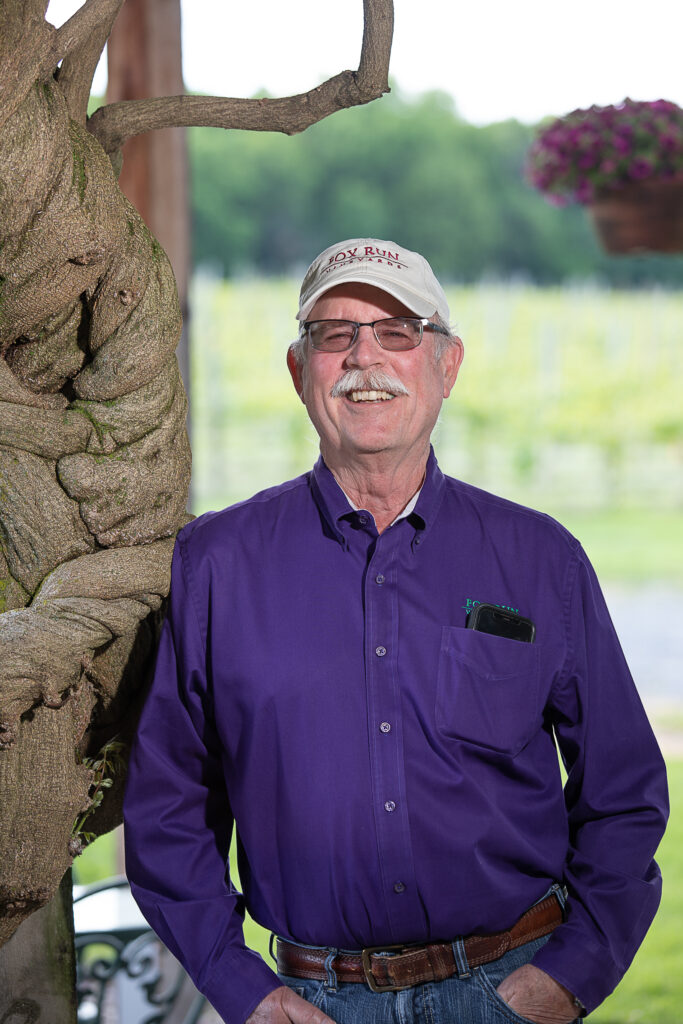
As the Finger Lakes enters a new era, with new generations returning to take the reins, Scott is optimistic. “A lot of the founders’ kids are coming back after working and studying winemaking around the world. They’ve known what’s possible here and they’re bringing their new education and ideas home.”
His advice to them? “Get involved in organizations that advocate for the industry. Policy work matters. If we want this industry to keep growing, we have to fight for the things that support it.”
Legacy, in His Own Words
As he reflects on 35 years, Scott isn’t focused on titles or accolades. What he wants to be remembered for is simple: “I hope people say I was a good person. I worked with everyone. That I put in a lot of good work, and that I tried to help as many people as I could.”
And if the growth of Fox Run, and the Finger Lakes as a whole, is any indication, it’s clear that his mark will last for generations.
