In the ever-evolving world of wine and grape production, research plays a crucial role in advancing knowledge, improving practices, and ensuring the sustainability of the industry. NYWGF’s commitment to research is evident in its annual research budget, which typically ranges between $350,000 to $600,000. The NYWGF Board of Directors is proud to share the results of 2024-25 funded research projects through individual reports, articles, and a series of webinars in 2025-26. Featured in this article are two NYWGF-funded studies:
- Development of resilient and high-quality wine grape varieties | Madeline Oravec, Assistant Professor at Cornell AgriTech
- Evaluation of Hybrid Winegrape Varieties on Long Island | Alice Wise, Senior Issue Educator and Viticulturalist at Cornell Cooperative Extension of Suffolk County
We invite you to learn more about these research efforts and stay tuned to our Research page for more details on upcoming webinars.
New York winemakers have been crafting wines made from hybrid grapes since the 1800s, but the difference between the hybrid days of yore wines, and the hybrids of today is analogous to the difference between horse and buggy transportation and a rocket ship. (We have generations of assiduous cross-breeding by researchers to thank for that).
Back in the day, hybrid grapes were largely the result of crosses between Vitis vinifera (European grapes) and Vitis labrusca (grapes native to eastern North America). The first cross is believed to have been accidentally conducted by James Alexander in the mid-18th century.
Over the next decades, more experimental crossings were conducted, and while the wines that resulted weren’t yet considered nearly as desirable as wines made from Vitis vinifera, their ability to survive harsh weather conditions and withstand disease made them the best option for growers in New York. And during the phylloxera epidemic of the late 1800s, these hybrids essentially saved European wines.
And yet, the stigma of less-than-ideal wine remained, and is still present in certain quarters of the wine-drinking, selling, and critiquing public. But that’s changing, thanks to scientists, growers, and producers who are eager to leverage the viticultural potential and eco-friendly attributes of these grapes.
Changes To Approach in Vineyard
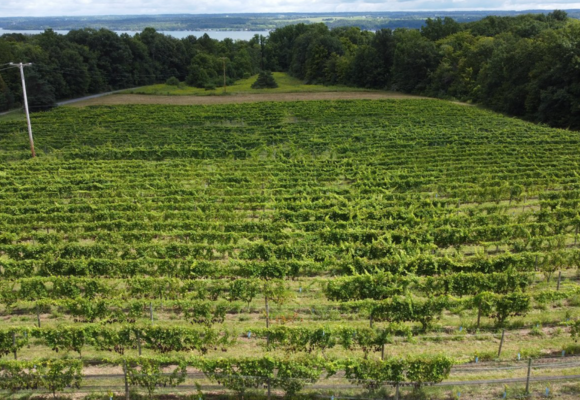
Hybrid grapes offer much higher yields than Vitis vinifera, primarily due to their ability to not just survive, but also thrive amid pest pressures and extreme temperatures. While it’s tempting to allow the grapes to grow—higher yields, more grapes, more money—growers are finding that restricting yields leads to much better quality.
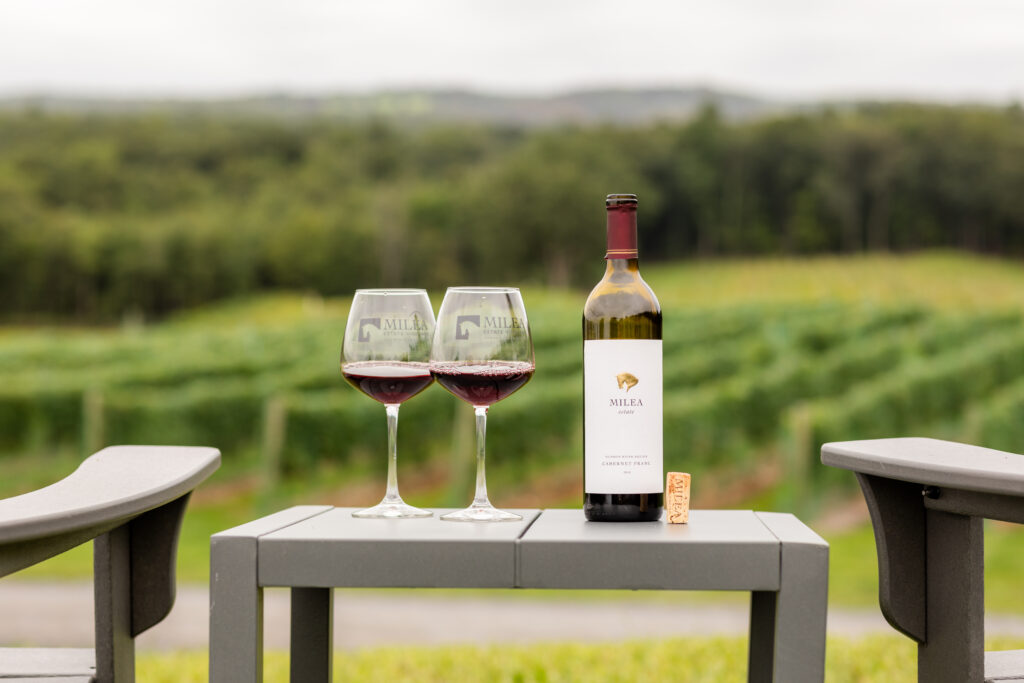
At Milea Estate Vineyard in Staatsburg, general manager Russell Moss says they’re growing Regent, Seyval Blanc and Vignoles, and working with growers on several other hybrids. The winemaking team has been increasingly excited about the quality, which Moss attributes to their approach in the vineyard.
“We treat hybrids exactly like vinifera in how we farm them,” Moss says. “They deserve respect. We don’t believe that a grape needs to have been farmed by monks since the 13th century to warrant respect, and we don’t sacrifice quality or price for hybrids.”
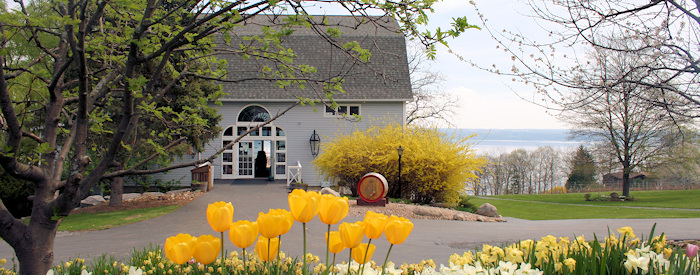
At Goose Watch Winery in Romulus, Amanda Fitzgerald echoes Moss’s observations, saying that their approach to growing Traminette, Melody, and Chambourcin has changed, with focuses on improving trellising to tease out sun-ripened flavors and thinning the crop more judiciously than they had in the past.
At Usonia Wine in Ovid, co-owners Alex and Julia Alvarez-Perez have embraced hybrids recently because of their ability to thrive without chemicals.
“After a few very challenging vintages and an increasing desire to convert to organic farming, in 2021 we decided we would not plant anymore vinifera,” Alex says. “In 2023 and 2024, we planted two white varieties, NY-81 and Helios, a Piwi, and two red varieties, Marquette and Noiret.”
Next year, they plan to plant Steuben and a few other hybrids in 2027. (They are still finalizing the picks.)
Like the teams at Milea and Goose Watch, the pair at Usonia is limiting yields to increase quality and ripeness.
Transforming Winemaking
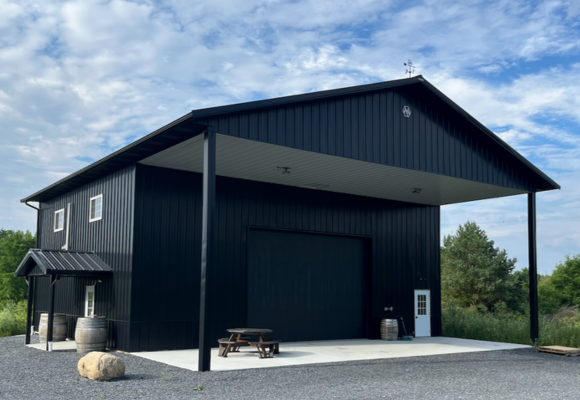
In the cellar, producers are experimenting to find new ways to allow these hybrid grapes to show their best side.
At Milea Estate, Moss says they’ve found Chambourcin makes an incredible rosé—if handled with extreme care.
“It extracts color quickly, which requires careful handling even with whole cluster pressing,” he notes. “But it forms 50% of our blend for Queen of the Meadow Rosé, our number one selling wine that’s featured in many by-the-glass programs around the Hudson Valley.”
The key, he says, is approaching hybrids without compromise.
“When consumers taste our Queen of the Meadow Rosé, or our old vine Seyval Blanc, they’re experiencing world-class wines that happen to be made from hybrid grapes.”
In the cellar at Usonia, they focus on gentle macerations and native yeast fermentations, while also pushing the boundaries of what many believe is possible.
“We’ve played around with carbonic maceration on Geneva White #2, we’ve done a whole cluster co-ferment of Chelois and Traminette, and made a sparkling red blend of three hybrids and Diamond, a native variety,” Julia says. “And with some, like Geneva and Verdelet, we’ve leaned into their wild, floral and foxy for lack of a better term side, which is not something we would have entertained a few years ago.”
Science Plants the Seeds
None of this would be possible without the ceaseless work of scientists like Madeline Oravec, assistant professor at Cornell AgriTech, and Alice Wise, senior issue educator and viticulturalist at Cornell Cooperative Extension of Suffolk County.
Oravec, who works to develop new climate-resistant and disease-resistant cultivars, says that recent technological advances will yield better results, faster.
“Recent advances in DNA marker technologies, particularly through VitisGen projects, have significantly improved our ability to breed for robust and durable disease resistance,” Oravec explains. “This allows us to make more informed decisions when choosing parents and selecting progeny, especially when trying to stack multiple resistance genes.”
Oravec and her research team are also integrating robotics and imaging systems into the screening process. The systems utilize computer vision and machine learning (a form of AI), to assess disease potential, which also allows them to make smarter selections.
For Wise, who has had one vinifera variety trial going for 31 years, growing hybrids is a constant education.
“Viticulturally, I have found that most hybrids do best on a high wire training system,” Wise says, adding that the 20 or so hybrids she has grown show much greater disease resistance in tough climates. “The ultimate goal – the Holy Grail in my mind – would be to also incorporate resistance to two diseases endemic in the eastern U.S., black rot and phomopsis. I understand from Maddie, however, that it is a tall order to breed something with those various layers of disease resistance in addition to good fruit quality. Achieving this goal – if it even is achievable – will take years, likely decades.
In the meantime, growers and winemakers will be investing in the phenomenal strides Wise and her colleagues have already made.
“At our main estate vineyards, we have five acres of hybrids out of our total 18 planted,” Moss says. “We plan on increasing that percentage significantly. We believe in walking the walk, not just talking the talk, and we’re working toward an eventual conversion to hybrids based on both quality potential and environmental sustainability.”