
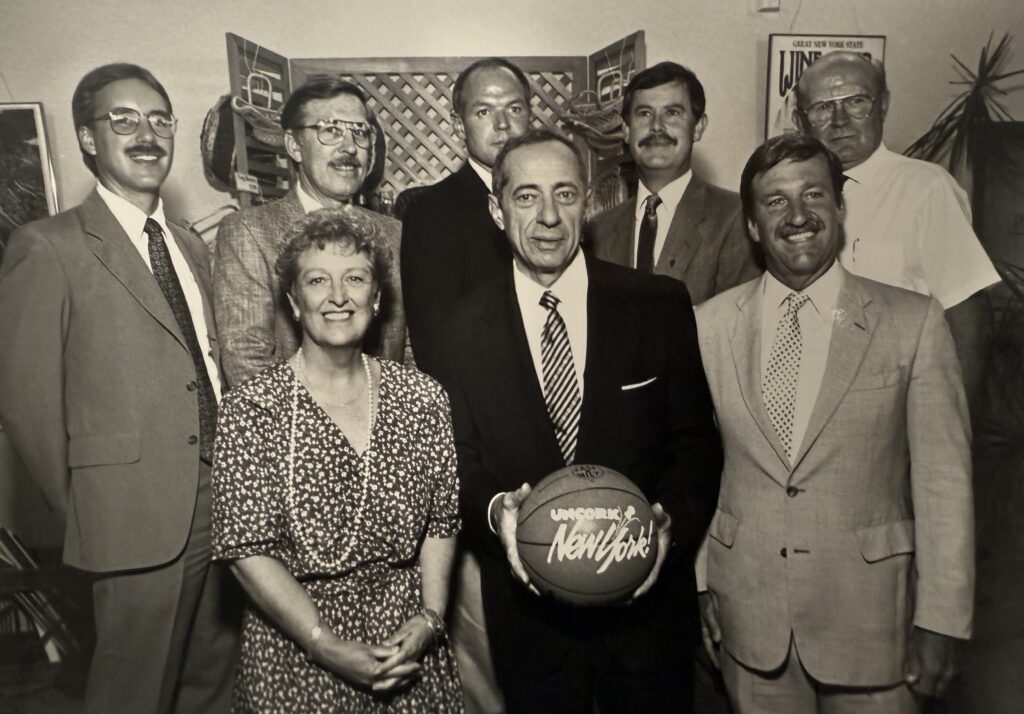
It was 1985, the year of Live Aid, New Coke, and the first versions of Microsoft Windows and the Sony Discman. There was the inaugural Wrestlemania, the Iran-Contra affair, Whitney Houston’s debut album, and “Back to the Future” was number one at the box office for the year. And, it’s also the year that the New York Wine & Grape Foundation (NYWGF) launched with a purpose to support the industry, noting at the time that “the wine and grape industry is a significant part of the state’s agricultural industry, and the continued production of wine, unfermented juice, and table grapes is of significant importance to the economy of the state.”
This year marks the 40th anniversary of the NYWGF, and much has changed in the world of New York wine production and grape cultivation in the past four decades. We set out to talk to some of the people who have witnessed those changes and helped them come about.
Crisis Breeds Opportunity
Jim Trezise, co-founder and President of the NYWGF, 1985-2017, and current president of WineAmerica, recalls the state of New York’s grape industry before the foundation was formed.
“In the early 1980s, the New York grape industry was in an economic crisis due to several factors: a depressed economy, subsidized imported wines, changing consumer tastes, and changes in corporate ownership of large Finger Lakes wineries,” he says. “Creating New York Wine & Grape Foundation was one piece of a four-part legislative strategy: allowing sales of wine coolers (a new product then) in grocery stores, which immediately boosted demand for grapes that otherwise would have been left hanging on the vine; allowing New York wine tastings in liquor stores to get more exposure at the point of sale; winery deregulation which eliminated unnecessary regulations and created more direct marketing opportunities for small wineries; and the Foundation to consolidate and coordinate promotion and research programs for the entire industry from Long Island to Lake Erie.”
Accomplishing all of that was not simple. Trezise, who was the lobbyist for all four objectives, credits former Governor Mario Cuomo for helping pass the legislation needed to move forward, despite “strong opposition from liquor stores” to some of the changes.
“Basically, Governor Cuomo read a major New York Times article about the grape crisis on a Friday in October 1983, and told his Agriculture Commissioner Joe Gerace to have a solution on his desk by noon on Monday,” says Trezise. He and Gerace pulled an all-nighter using an IBM Selectric to create the four-point proposal. Once the NYWGF was in place, it took just a few years for the grape industry to become the fastest-growing part of the agriculture and tourism sectors.
“As I often say, crisis breeds opportunity,’ says Trezise.
Sam Filler, executive director of NYWGF since 2017, recalls Trezise’s famous mantra, “Diversity is our Strength. Unity is our Power,” and echoes that sentiment.
“It took a community of many different people with disparate interests to form the Foundation,” Filler says. “New York State created the New York Wine and Grape Foundation in 1985 to strengthen the agricultural and economic potential of New York’s wine and grape industry. Forty years later, it has proven to be a wise creation by the state.”
Collaboration Breeds Growth
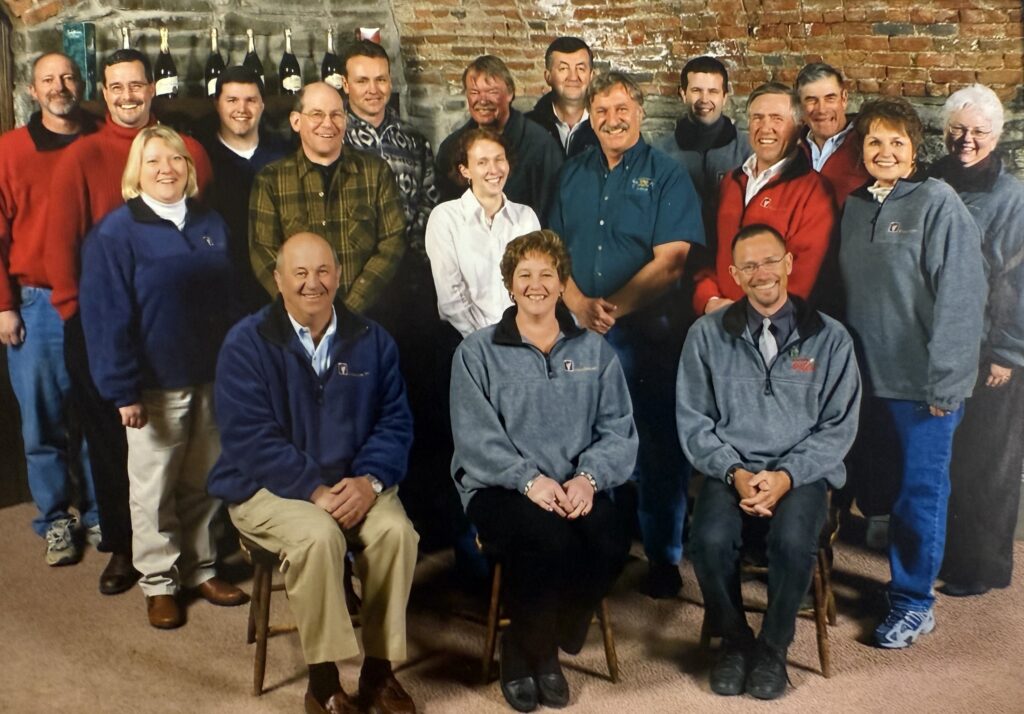
Trezise had many people helping him pull it all together, and Rick Sampson, retired president and CEO of the New York Restaurant Association, was part of those early days.
“Jim [Trezise] turned to the restaurant association early on because our members were his customers. One of the problems for many years was trying to get New York restaurants interested in selling New York products,” says Sampson, who eventually sat on the NYWGF’s board of directors.
“Customers today are more sophisticated than ever, and they want to try local products,” says Sampson. But that wasn’t always the case.
In the early years, he helped coordinate a collaboration between his organization and the NYWGF by inviting restaurants to try New York wines as well as using the restaurant association’s lobbying power to make sure “money kept being put into the Foundation.”
But Sampson gives much of the credit for the NYWGF’s strong presence today to Trezise.
“Jim Tresize is like a brother to me,” he says. “I watched him take this organization from nothing. He didn’t do it alone. He did it with the board. The board meets three or four times a year, but Jim did it 52 weeks a year. He was in Albany, talking to any group that would listen.”
Sampson tips his hat to the NYWGF for starting where they did and getting to where they are today.
“I hope that their members really appreciate the job that they do and the commitment that they make to an organization,” he says, adding a “Congratulations for 40 great years.”
Another industry veteran who recognizes what Trezise and the early board members of the Foundation did is John Martini, president of Martini Vineyards/Anthony Road Wine Co. in the Finger Lakes. He started planting grapes in 1973, selling to Taylor Wine Co. By the 1980s, things were changing.
“The grape market changed for the growers. There was concern across the state for the future of grape growing. A number of grower families started wineries in an effort to help the grower community and the emerging wineries,” says Martini. Many of those wineries were trying to deal with the remnants of Prohibition, and Martini recalls how Trezise and the board “spent many hours in Albany chipping away at those barriers and also adding the Farm Winery license to ease the cost and paperwork required, to allow small growers to establish their wine operations.”
Noting that the global wine industry, of which New York state is now inarguably a part, is facing some new headwinds, Martini believes that “more than ever we will need the Foundation to be front and center, working to tell the story and find the answers necessary to aid growers in producing the quality grapes for the future.”
Another winery that benefited from the NYWGF’s creation from the start is Glenora Wine Cellars in the Finger Lakes.
“From our perspective, the Foundation has given the wine and grape industry a voice
in the world of wine, government, and the media. Before [its establishment], there were many smaller organizations that represented segments of the industry,” says Gene Pierce, president and owner of Glenora Wine Cellars. Those organizations didn’t have much power, but with the advent of the NYWGF, things changed.
“The Foundation is able to carry the concerns and issues impacting the wine and grape industries to local, state, and national government entities. The results being the growth of the industry.” He cites the growth specifically in the Finger Lakes from about 15 in the region in 1985 to well over 140 today.
Throughout the state, there were fewer than 40 wineries in 1985. Today, there are more than 440.
Dedication Breeds Success
“The success and growth of the Foundation over the past 40 years is due, in large part, to the fact that it is an organization driven by the industry and has been led by dedicated board members and staff,” says Pierce.
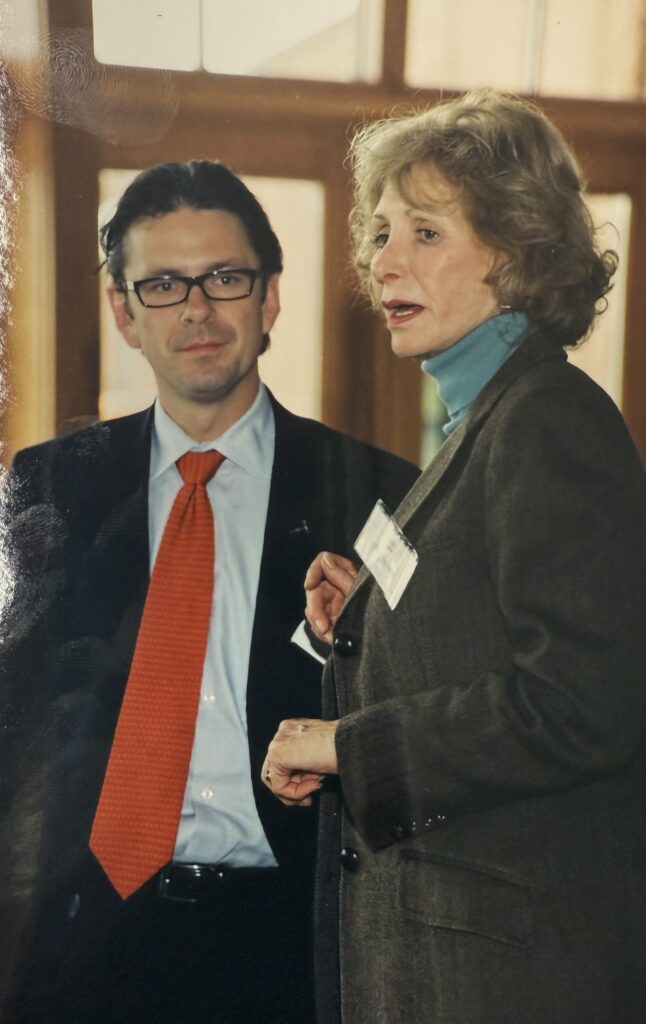
One of those dedicated board members was Phylis Feder. “I came into the New York wine world when I married Ben Feder, and he started Clinton Vineyards in the Hudson Valley in 1969,” says Feder. She took on a role on the board of the NYWGF in the 1990s, eventually becoming the first female chairman.
She recalls a rift happening among some in the New York wine industry at the time, and some talk about starting another organization, but ultimately, “they just didn’t have a strong enough concept to want to undermine and get rid of the New York Wine & Grape Foundation,” she says.
“What came from that was a stronger board, a stronger foundation, and a wonderful sense of working together,” says Feder.
“I am honored to have been part of it,” she says. “I am a woman of a certain age, in my 90th year, and I was lucky to have all of this happen in the first place. The idea of getting involved with the wine world, both growing and making, was very exciting to me. And having the opportunity to be part of the very organization that was working to promote it meant a lot to me.”
Kim Wagner, co-owner of Stroutridge Vineyard in the Hudson Valley, appreciates the dedication of the New York Wine & Grape Foundation and its board members.
“The Foundation has been helpful in different ways over the years. Their support of research is front and center. The New York climate and grape varieties are different from other top wine-producing states, so the focus on specifically what New York needs is very important,” she says.
Wagner notes the increasing focus on skill building within the industry through webinars and mini-grants, saying they have been “invaluable across a wide variety of topics from sustainable grape growing, to wine making and through to sales and marketing.”
She also praises the NYWGF’s response to the problems COVID created for the industry.
“They were helpful in assembling and communicating about the regulatory guidance we needed to follow to remain open and operating as ‘critical businesses.’ This was sometimes very challenging because a regulation would come out at 9 am, and we needed to know about it before we opened that afternoon. They were crazy times, and it was great to have an organization looking out for us as we tried to stay in business,” Wagner says.
Finally, she believes it’s important to recognize that the NYWGF serves the entire grape industry in the state, not just the wine grape industry.
“It’s not just about wine. The legislation that created the organization ensures that there is broad representation of the wine and grape industry, including representation from the table grape and grape juice sectors,” Wagner says.
Lillian Taylor, who, along with her husband Walter, founded the modern iteration of Bully Hill Vineyards in the Finger Lakes, believes the NYWGF “has been an incredible ambassador for the region, Bully Hill included. Over the years, the NYWGF has worked hard to elevate the reputation of New York wines on both a national and international scale.”
Noting the ongoing education and networking opportunities the NYWGF provides, she says it’s “done a fantastic job of connecting consumers, producers, and media in a way none of us could ever do alone. Their dedication is vital to the success of wine in New York State.”
Taylor echoes the sentiment of everyone interviewed for the 40th anniversary by saying, “Cheers to another 40 years of New York Wine & Grape Foundation!”