Dramatic love stories usually involve heartbreak, but this one is refreshingly tear-free.
The unambiguous and widely heralded rise of Cabernet Franc in New York has been, many say, just a matter of time.
“Cabernet Franc has really come into its own in New York over the last several years,” says Amy Racine, beverage director at the Michelin-starred JF Restaurants from Chef John Fraser. “As growers have spent more time with it, there’s a lot more confidence around how and where to plant it, and how to let the site show through, which I think you can notice. The wines feel more focused than before. You still get that freshness and lift that’s so characteristic of New York, but with better ripeness and structure than people might remember from earlier on.”
Today, there are around 638 acres of Cabernet Franc under vine across New York, making it the most planted red vinifera grape in the state. Before the 1990s, there was next to nothing. The increase in the acreage hasn’t been random; wine growers and makers have spent years experimenting with small plantings, and collaborating with researchers at Cornell to ensure they’re planting in the best places, and farming the grapes in a way that will ensure the freshness, but also full ripeness, Racine and others find so compelling in the finished wines.
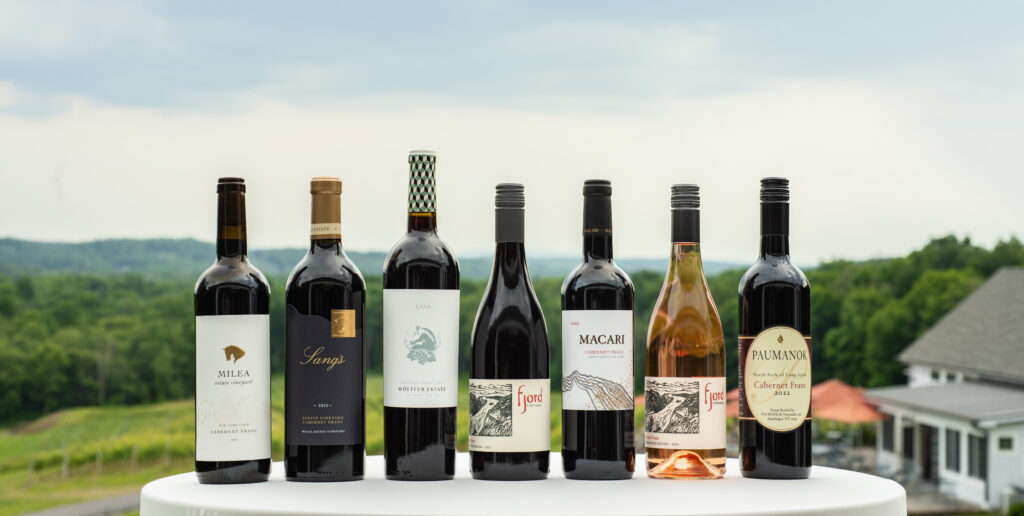
The best wines won’t make a splash, though, unless people drink them. Cab Franc Forward, a grassroots initiative led by wineries across the state, has actively pushed to make this noble grape the Empire State’s flagship red, and in doing so, has conducted activations, master classes, and sampling events that help introduce more people to the ageworthiness and depth of the Cab Francs made here. As word spreads, enthusiasm builds. In 2025, Cab Franc Forward’s annual tasting in New York City attracted 500 attendees; this year, it brought in more than 600.
Read on for more on how we got to where we are.
Pioneers + Lessons Along the Way
The team at Lamoreaux Landing Wine Cellars planted the first Cabernet Franc at the Finger Lakes estate in 1988, making them one of the key pioneers responsible for building the momentum the grape is currently enjoying. Owner Josh Wig explains that since the beginning, the grape’s potential was clear to him.
“We hope that the Cab Franc Forward initiative will continue to educate and grow enthusiasm for the varietal, but regardless of New York declaring the grape its flagship, Cab Franc will remain the primary focus of Lamoreaux Landing,” Wig says.
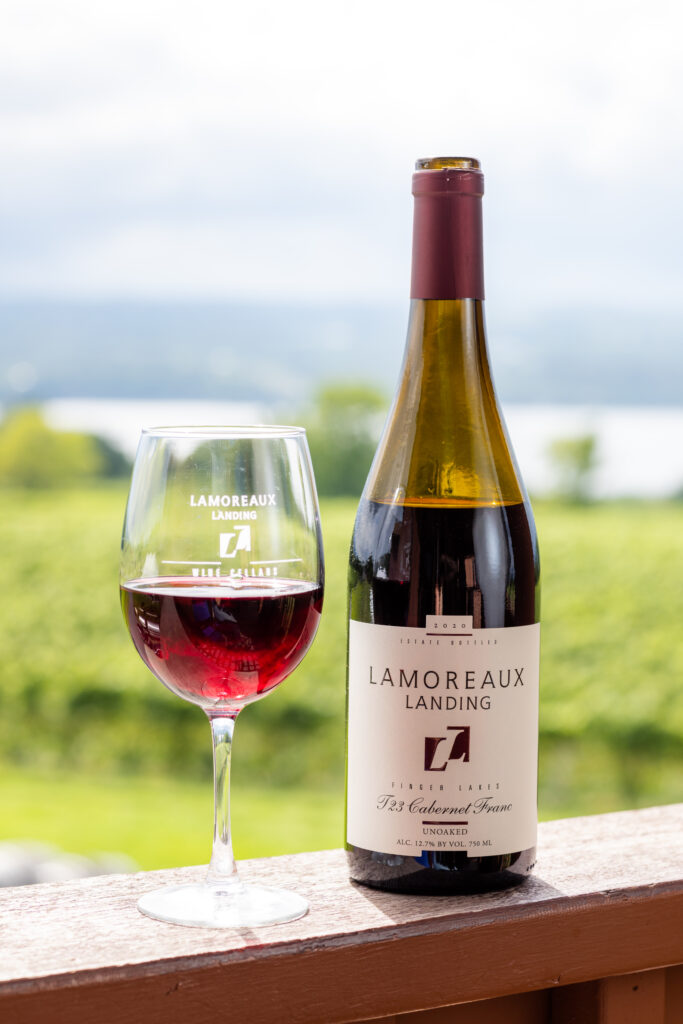
Today, Lamoreaux uses Cabernet Franc to explore the intricacies of terroir and technique. Twenty-three acres of certified sustainable Cabernet Franc are under vine there, across three soil types, using six different clones. Currently, they produce a classic barrel-aged Cab Franc, an unoaked style, a dry rosé of Cabernet Franc, and a single vineyard unoaked.
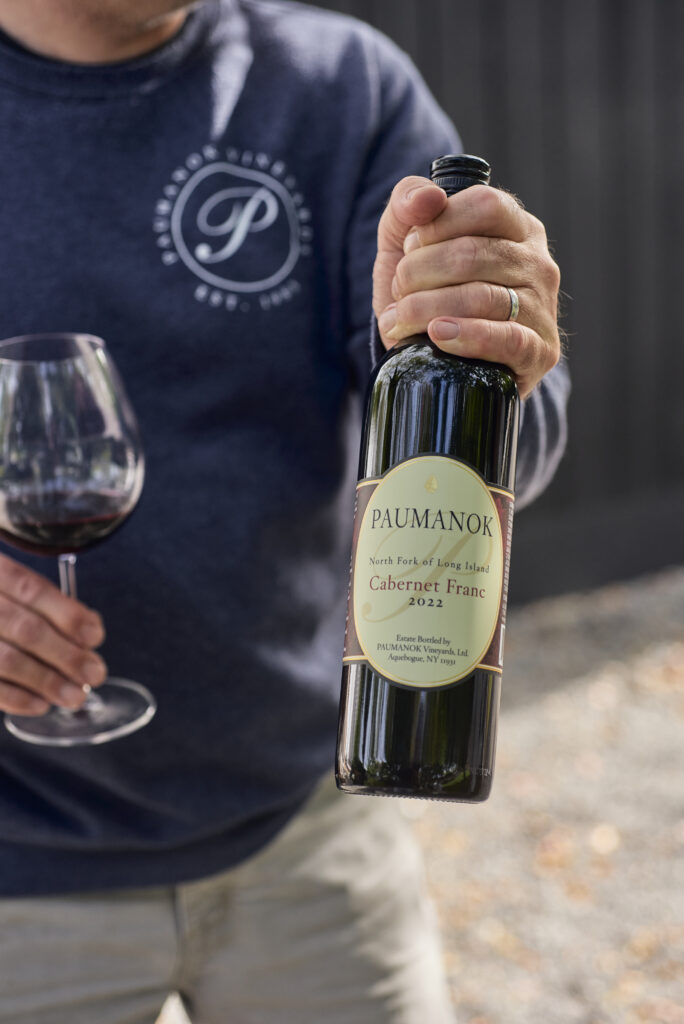
Paumanok Vineyards in Long Island was also one of the first to invest in Cabernet Franc.
“We first planted Cabernet Franc at Paumanok in 1986,” says second-generation Kareem Massoud. “We currently have eight acres planted, and we are planting another three acres of Cab Franc this spring. Plus, we have another 7.5 acres of Cabernet Franc, mostly planted in 1984, at Palmer Vineyards, which we also own and operate.”
Massoud says the team purposefully keeps their yields low–between 1.75 and 2.5 tons an acre to concentrate ripe flavors and complexity. Like Wig, Massoud sees Cabernet Franc as an ideal vehicle for expressing time and place.
“At Paumanok, we have a track record for producing well-balanced Cab Francs that are well-structured for their weight,” he says. “I like to make the parallel between our Cab Franc —and Long Island and New York’s Cab Francs in general—and one of my favorite non-New York regions, Beaujolais. Cru Beaujolais vary in weight, though, but they are always well-balanced and well-structured for their weight, delicious everyday food wines and terrific values, just like our Cab Franc.”
He says that to truly let the wine shine, he opts to age them in neutral French oak and, to a lesser degree, steel barrels.
Both wineries are garnering accolades and recognition for their work. Lamoreaux’s 2023 T23 Unoaked Cabernet Franc just earned 92 points from James Suckling, and Paumanok is being poured at concepts from wine royalty Aldo Sohm, Racine, and Jim Meehan.
A Focus on Farming
Ravines Wine Cellars began making a stand-alone Cabernet Franc in 2003. They farm 20 acres of Cabernet Franc across two sites in the Finger Lakes, co-owner and winemaker Morten Hallgren.
Over the years, they’ve learned that meticulous farming and thoughtful site selection in New York’s unforgiving climate are essential.
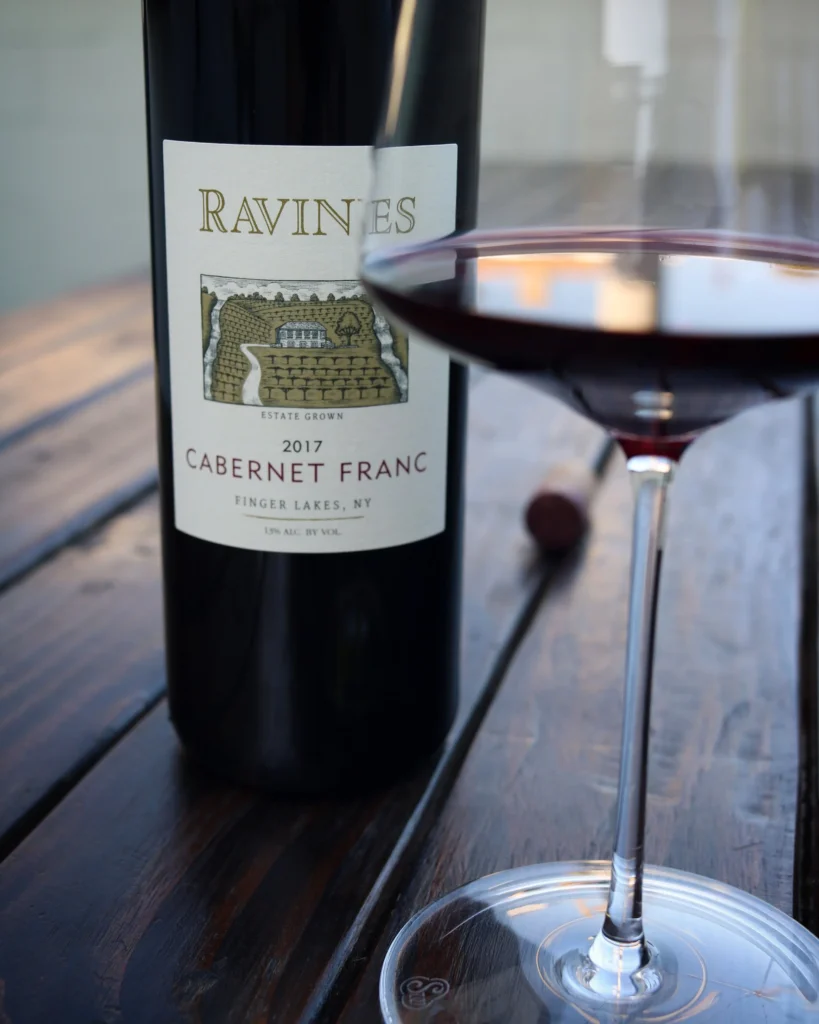
“What is extremely important for growing Cabernet Franc is keeping the vigor down as it is a grape variety that, given a chance, will produce an excessive amount of grapes which become difficult to ripen as it’s a very late ripener,” Hallgren says. “Shoot thinning, cluster thinning, and leaf pulling can often be required. As a late ripener, Cabernet Franc requires well-protected sites with a long growing season, with proximity to the lakes and significant slopes allowing the cold air to drain.”
He admits that it has been a slow climb for Cabernet Franc’s current lofty position in the Finger Lakes.
“When Jerry White spoke about Cabernet Franc in his lectures about vineyard operations in the Finger Lakes around the turn of the millennium, many of my colleagues had never previously worked with Cabernet Franc,” he says.
Hallgren credits the late White and other researchers at Cornell with finding a top-quality red that could survive and thrive in the climate, with careful choices.
Torrey Grant, wine director at Manhattan’s Leonetta, says he has been thrilled to see the rise of Cabernet Franc’s quality over 25 years of visiting the Finger Lakes. He credits thoughtful site selection and an evolving approach to farming with the progress.
“In the years I have been drinking these wines from the Finger Lakes, I have noticed a subtle change in the wines,” Grant says. “If you don’t drink a lot of Cabernet Franc, the expectation might be for the bell pepper, raw jalapeño notes found when picked in cooler vintages or picked too early. But talented winemakers understand that with this grape, you get all the elegance we have come to expect from cool climate growing regions, with herbal notes, earth, and ripe fruit.”
Globally Ascendant Grape
Finally, many believe this misunderstood grape is getting its due.
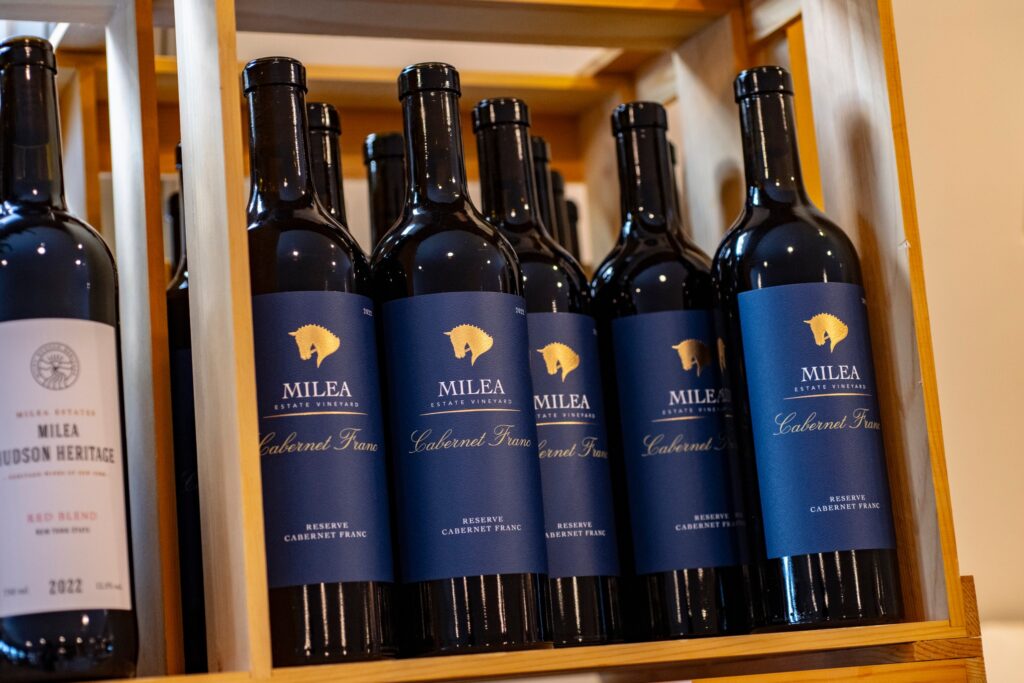
“Cabernet Franc has always been a winemaker’s favorite, both to make and drink,” says Darren Chertkoff, who leads the winemaking team at Milea Estate Vineyard in the Hudson Valley. “It is exciting to see the rest of the industry and the general public start sharing the enthusiasm for the grape and the beautiful wines being made from it here in New York State.”
It also helps that Cabernet Franc is having a bit of a moment across the globe.
“Cab Franc has been ascendant globally for several years, and it is ascendant in New York as well,” says Massoud. “Cab Franc is hot and trendy, and New York is doing more than its share to drive the growing global popularity.”