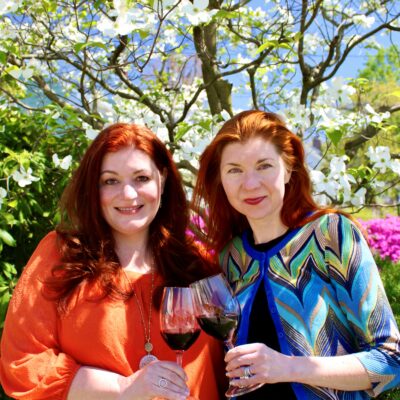
When most of us think about ideal wine and food pairings, we think about what we’re eating and then select our wines.
What if, instead of selecting a wine to pair with food, we all picked dishes based on the wine we wanted? At many New York wineries, this philosophy is being deployed, with delicious results.
We spoke to winemakers and sommeliers to find out how they select their pairings, and emerged with several general philosophical takeaways and specific pairings that we are now excitedly deploying at restaurants and in our own kitchen.
Read on for their appetite-whetting ideas!
What Grows Together Goes Together
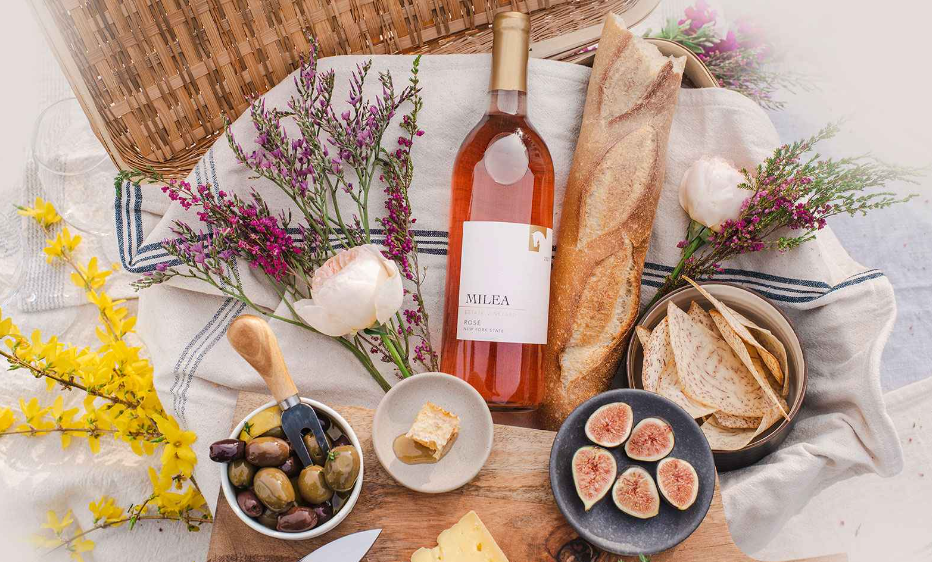
“The adage that ‘what grows together, goes together’ may seem overused in the wine world, but it most certainly rings true in my experience,” says Gibson Campbell, who drives the food and education program at Macari Vineyards in Long Island’s North Fork. “The cheese and wine pairings that seem most harmonious and complete to me are undoubtedly the cheeses that are crafted within a short distance from our vineyard and winery.”
Campbell, who shoulders the tough gig of being Macari’s chief cheese buyer and taster, works closely with the family-owned Catapano Dairy Farm, home to a small herd of Saanen, Alpine, and Lamancha goats.
A current fresh-from-the-fields pairing is Catapano’s Fresh Chevre, dolloped on ciabatta, drizzled with local honey, then paired with Macari’s Katherine’s Field Sauvignon Blanc.
“As foods tend to impact the flavor of wine more than the wine on the food, I look for delicate, nuanced cheeses that won’t overpower our balanced and nuanced wines,” Campbell explains.
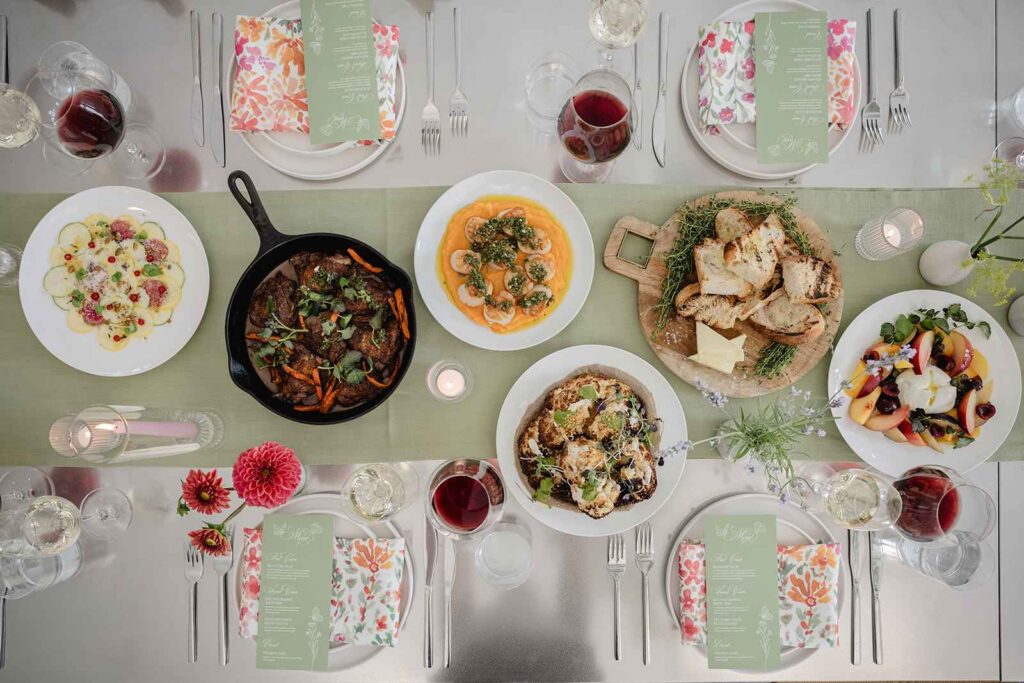
Milea Estate Vineyard’s executive chef, David Kim, also loves to cook with local ingredients, seasoned with his Korean heritage—always with the goal of elevating their Hudson Valley-born-and-bred wines.
“Our menu is designed to enhance the wine experience,” Kim says. “Each dish is created with balance in mind. We love to showcase Hudson Valley cheeses alongside our Chardonnay, offered in both unoaked and oaked styles.”
Kim says that the un-oaked Chardonnay, with its crisp, fruit-forward freshness, highlights creamy, delicate cheeses like Chaseholm Farm Creamery’s Camembert, while the oaked style adds warm layers of vanilla and spice that pair with aged selections, like McGratch Cheese Company’s Rascal.
At Ryan William Vineyard in the Finger Lakes, owner Samira Baida says they relish using their farm-raised beef and eggs, saying that flavors “just work.”
“We raise grassfed and finished Angus beef on our farm, and we hand-grind our beef for our burger,” Baida says. “It is by far our number one favorite way to connect the flavors of our farm when we serve the burgers with our Merlot. The combination is earthy and fruit-forward, and neither one overpowers the other.”
Focusing on Specific Flavors
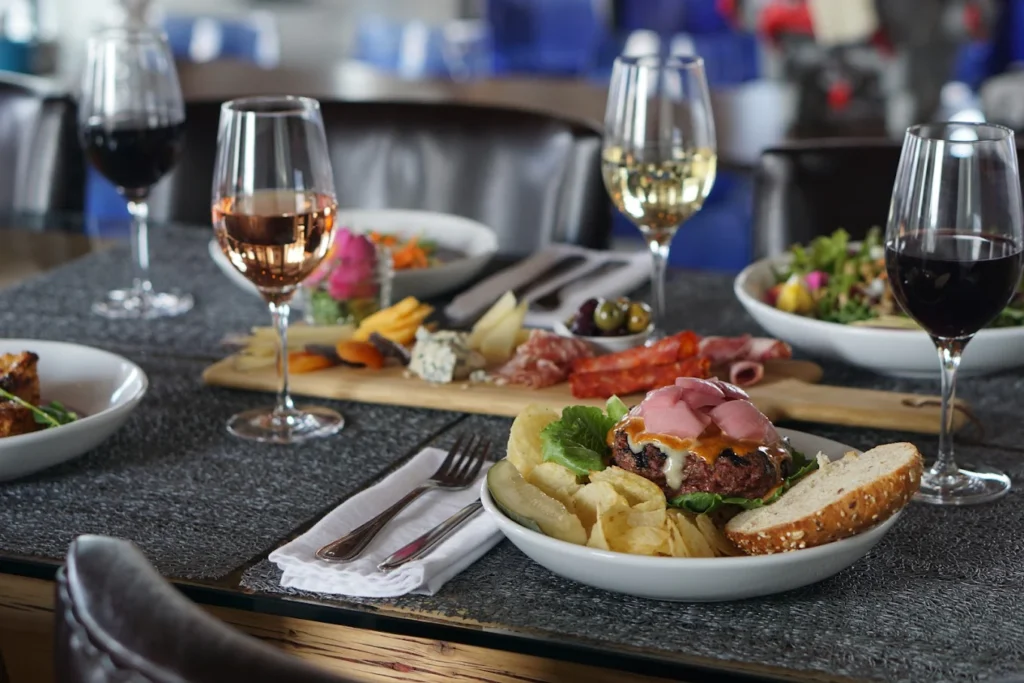
Wine pros also focus on finding flavors that make magic.
“Haskell’s Seafood in Westhampton only uses local caught fish,” says Christopher Tracy, who attended the French Culinary Institute in Manhattan before becoming a winemaker at Channing Daughters in Long Island. “We serve their smoked bluefish spread at the winery. It is amazing with our Rosato.”
The blend of Franconia, Merlot, and Rosato di Refosco is fruit-forward, mouthwatering, and balances the smoky, rich, salty spread.
At Ryan William, Baida finds that their off-dry Gewürtztraminer offsets their Thai Chickpea Salad.
“The wine isn’t overpowering or overly floral, but it is rich and full-bodied, and works with the heat and sweetness of the salad,” she explains.

Christopher Bates, who is a master sommelier, executive chef at F.L.X Table, and winemaker at Element Winery in the Finger Lakes, notes that New York is uniquely poised to excite the world’s palates, thanks to our auspicious climate.
“As many global regions push toward riper, fuller, more powerful styles, pairing wine with food can be increasingly challenging,” Bates says. “Here in the Finger Lakes, though, we live and work on the edge of viticultural possibility. That unique position gives us wines of elegance and freshness—qualities that once defined regions like Burgundy and the Loire, but are increasingly rare elsewhere.”
The mouthwatering acidity, finely woven tannins, and delicacy allow New York wines to elevate food. Bates recommends pairing New York’s fuller-bodied Cabernet Franc, Merlot, and Cabernet Sauvignon with grilled ribeye or braised short ribs, while more delicate iterations are suitable for filet mignon, venison, or mushroom-driven dishes.
Riesling, Bates says, is “a chameleon.”
“Dry styles sing with cooked fish, peas, herbs, and even asparagus,” he says. “Off-dry styles cover an even broader range, working with dishes that lean sweet, savory, or earthy. Grilled pork over fire is one of my favorites.”
Elevating and Highlighting Textures
But wine and food pairings that land don’t just focus on flavor. Texture is important too.
“The Finger Lakes is producing an incredible array of sparkling wines that improve every vintage,” Bates says. “Sparkling wine is perhaps the ultimate food-pairing wine: bright acidity, texture, and freshness that make it work with nearly everything, from raw shellfish and seafood crudos to roasted poultry and even game.”

Kim is also eager to tout sparkling pairings.
“Our guest favorite is Korean fried chicken paired with our nonvintage Hudson Valley Vineyards Right Bank Brut Cuvée, crafted in the traditional method,” Kim says. “The bright acidity and lively effervescence of the sparkling wine cut through the richness of the chicken, while its fresh apple and pear flavors balance the heat of the honey gochujang glaze.”
The biggest takeaway? As Bates says, New York wines “are built for the table.”