For centuries, the job of growing and making wine was considered a man’s domain. Even today, the most recent numbers show that just about 14% of winemakers in California are female. (Because California makes 85% of our country’s wine, this is a significant statistic.)
But in the Empire State, a growing number of women are leading winemaking and, in the process, reshaping the state’s viticulture.
Launching Pads & Mentors
As anyone who has had a starter job that transformed their perspective on the industry it was in—for good or ill—can attest, that first role often lays the foundation and influences their own approach to work for decades to come.
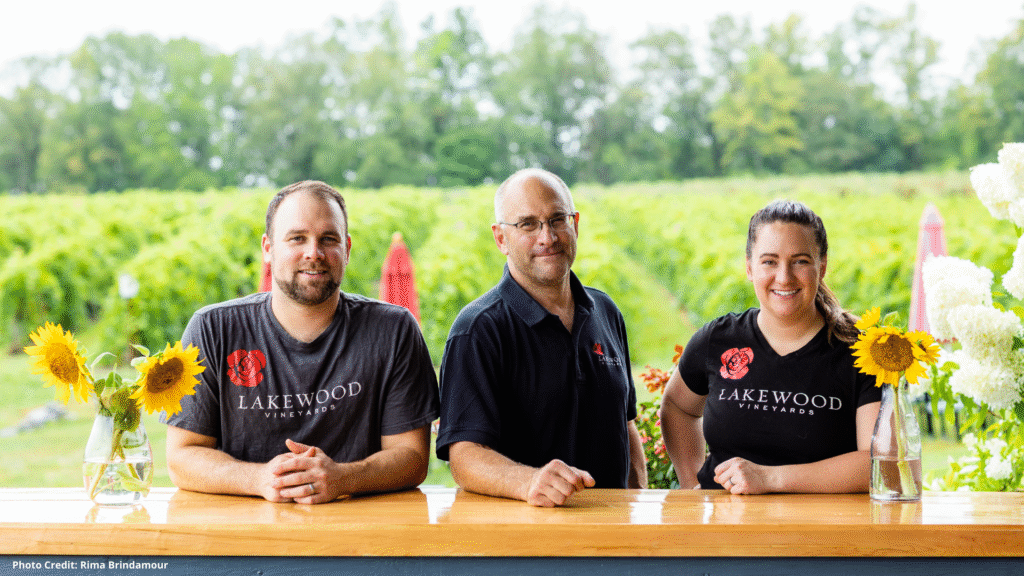
Abby Stamp Wilkins, a member of the third generation at Lakewood Vineyards on Seneca Lake, now assistant winemaker there, left home before returning armed with a diverse array of viticultural experiences.
“Growing up in a winery family, I’ve always been involved in the wine industry to some degree,” Wilkins says. “After graduating from Cornell Enology and Viticulture, I worked in New Zealand and Oregon. In both of those jobs, I had highly talented and incredibly hard-working female supervisors. I was able to learn a lot from them.”
It also gave her fresh appreciation for what her own family was doing in New York.
“Witnessing my own family and countless other Finger Lakes winery families build their businesses from the ground up and work tirelessly to put this region on the map has been a huge inspiration to me,” Wilkens says.
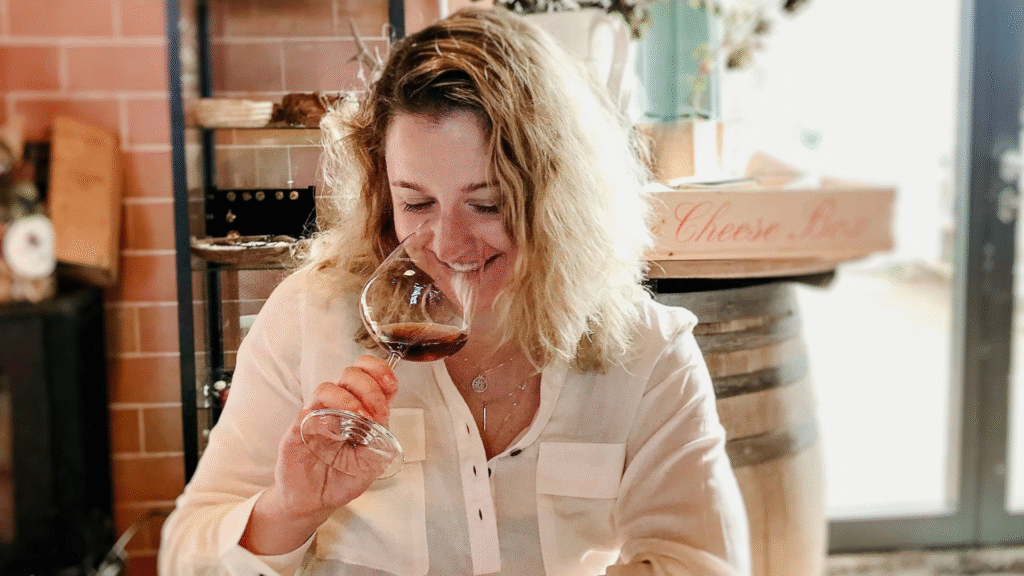
Vanessa Hoffman, winemaker at Knapp Wine in the Finger Lakes, says she also jumped right into winemaking after college—despite not actually studying enology.
“I started in the wine industry right after college,” Hoffman says. “I had a degree in molecular & cell biology and was looking for a job in a lab for a year or so before applying for medical school. I had always been interested in the wine industry, so when I noticed that wineries hired lab positions during harvest, I thought it would be a good way to stay involved in science but also have an adventure.”
She landed at Ridge Vineyards in Lytton Springs, CA, by “pure luck” when their original candidate backed out. It was such a great experience; Hoffman never left the wine industry.
“Working at Ridge Vineyards was definitely a huge influence on me,” Hoffman says. “The entire team at Ridge was the most passionate group of people I have ever worked with to date. They cultivated such a strong company culture that every single person felt valued as part of the team and believed they were working together to make the best wine in the world. It was like working for a very positive, happy cult.”
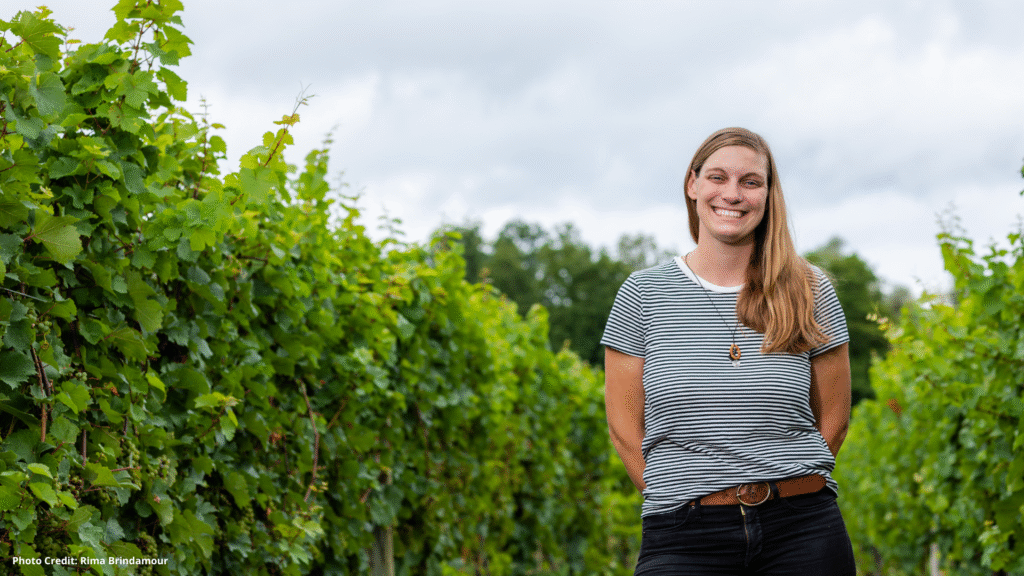
Julia Hoyle, winemaker at Hosmer Winery in the Finger Lakes, says that really, she “stumbled into wine.”
“I was a junior at William Smith College in Geneva, and was looking for a weekend job,” Hoyl says. “I applied to Fox Run Vineyard‘s tasting room in the fall of 2009, and this role quickly piqued my interest in wine.”
What started as a weekend gig became a lifelong passion, thanks at least in part to Peter Bell, who worked as winemaker at Fox Run for 27 years, and Dave Breeden, winemaker at Sheldrake Point Vineyard.
“Peter allowed me, as he allowed so many others, to intern in his cellar and start to learn the ropes,” Hoyle says. “Dave Breeden was the first winemaker who not only took me under his wing but allowed me to start experimenting on my own. As the assistant winemaker at Sheldrake Point [the position she held before joining Hosmer Estate Winery], I started to connect dots in the winemaking process that allowed me to grow personally and professionally.”
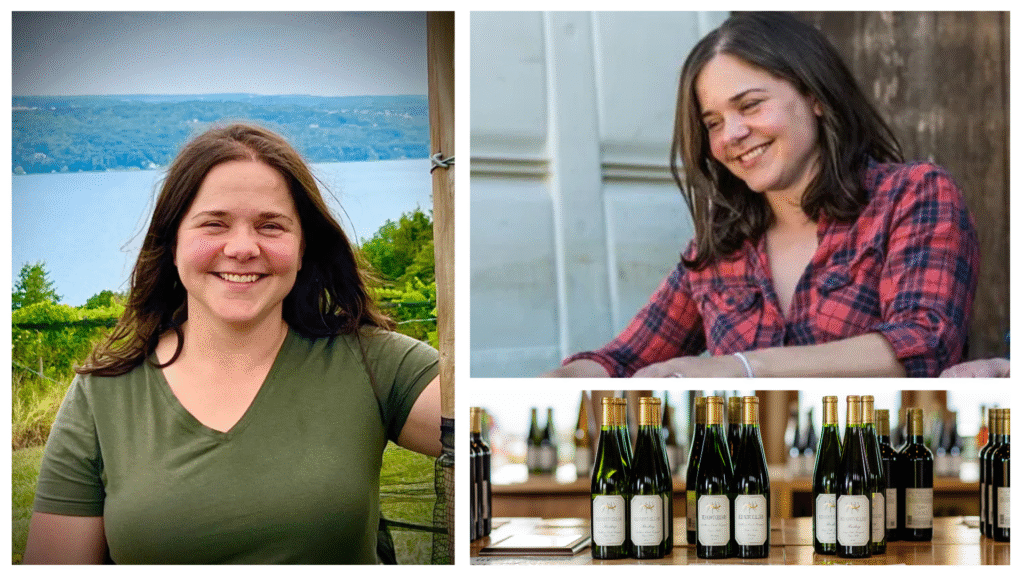
The Art of Collaboration
Winemaking, ultimately, is a dance performed by a team in the vineyard, cellar, and tasting room.
Christina Zapel, lead winemaker at Red Newt Cellars in the Finger Lakes, believes that collaboration in wine “is about dropping your ego.”
“There has to be a willingness to share ideas, and to be generous and assist others when necessary,” Zapel says. “I know many winemakers who are secretive and unwilling to share their processes. I am an open book and will answer any winemaking question. I am always willing to have interns or employees share their ideas with me or help problem-solve cellar issues.”
Generosity and openness pay dividends, she says.
“Being able to see another perspective has definitely made me better at my job,” Zapel says. “I know I learned a lot from people who were open to my questions and who explained the whys of how they do things.”
For Hoyle, the spirit of collaboration and generous winemaking means reaching out to the next generation, just as Bell and Breeden did with her.
“Collaboration means being an open book to anyone who wants to learn about our beautiful region,” Hoyle says. “We make amazing wines in the Finger Lakes, and I want to share that story wherever I go! It is at the heart of the Winemaker Tasting Group that several of us are a part of, and it also has allowed me to meet so many people in all facets of our industry.”
Favorite Wines To Make and Sip
Winemakers often say it takes a lot of beer to make good wine. After a long day at harvest in the fields and the cellar, a crisp lager is often exactly what the wine team wants at the end of the day. But the danger of coming down with “house palate,” a fictional affliction said to plague winemakers who only drink their own wine, and therefore no longer see its flaws, is a serious consideration for many.
So drinking far and wide is the order of the day for many of New York’s women winemakers who want to push the bounds of their creativity.
For Wilkens, who is seven months pregnant, drinking wine for fun seems like a distant memory.
“I couldn’t tell you the last glass of wine I drank,” she says. “I can tell you that the next glass of wine I drink will definitely be something with bubbles.”
Hoyle often opts to sip wines that don’t necessarily reflect her own winemaking interests—with one notable exception.
“When I drink for pleasure, I adore Lambruscos and other bright, fruit-driven red wines,” says Hoyle, who most enjoys working on barrel-fermented aromatic whites in her own cellar. “I have never turned down a good Riesling, dry, semi-dry, or sweet.”
Zapel also likes whipping out the big red guns when she isn’t working.
“Most recently, I drank a 2015 Constanti Brunello di Montalcino with a wagyu ribeye for my husband’s birthday,” Zapel says.
Wine-sipping options are practically endless. And thanks to a tight-knit community of collaborative winemakers (both female and male), there’s an increasing number of wines to choose from in the Finger Lakes that were shaped by women.