
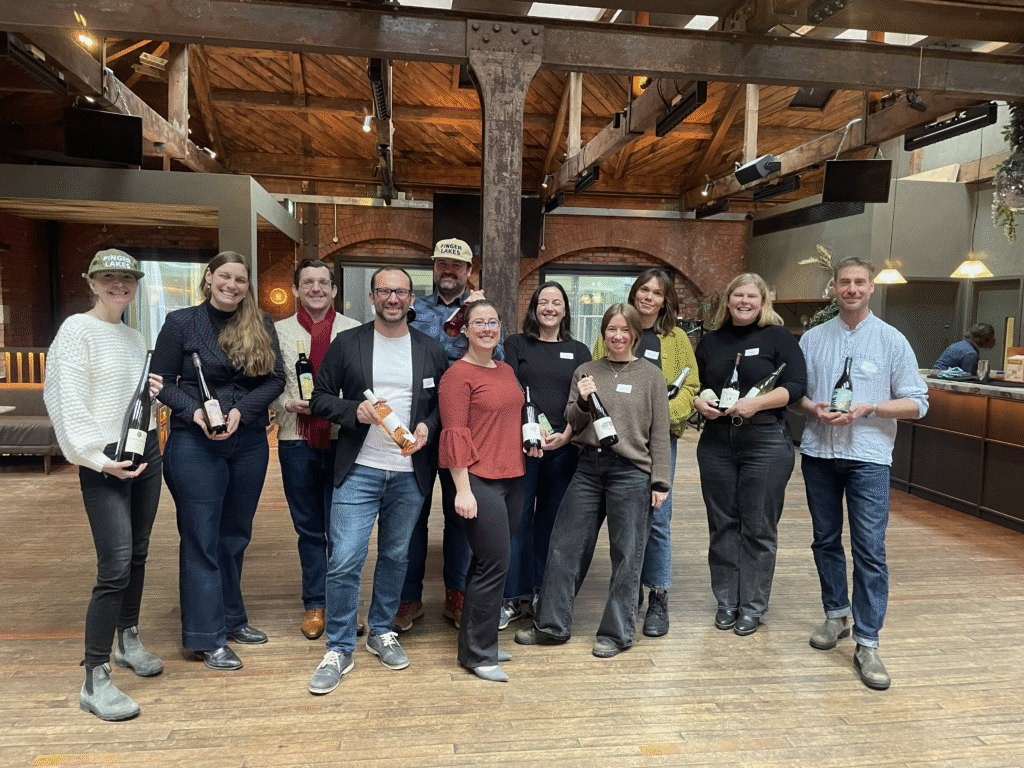
How significant is a sighting of Finger Lakes Riesling by the glass in Tokyo? Significant enough to inspire a Food & Wine article about the “squeal” editor Lucy Johnson let out when she spied Hermann J. Wiemer’s Reserve Dry Riesling in Japan, as well as the details of how that wine made its way across the Pacific Ocean. The subheadline of that article reads “A glass of Finger Lakes Riesling in Tokyo reveals how far New York wine has traveled.”
The travel planning to get New York wines into the glasses of those out of state—either to other U.S. states or other countries—takes several forms. Individual wineries, distributors, and exporters have their hand in it. And, for the past several years, the New York Wines Export Program, which gets funding support from the United States Department of Agriculture’s Foreign Agricultural Service (FAS), has made a concerted effort to get wines abroad to Western Europe, Japan, South Korea, Vietnam, Canada, and the Caribbean.
Earlier this year, several members of New York’s wine industry who applied to be representatives for the Export Program spent an intensive nine days in Europe, acting as ambassadors for the state. They promoted New York wine at trade tastings in Oslo, Copenhagen, Paris, and London. From all accounts, Europeans were excited to discover the wines from the Empire State and were frequently impressed with what they tasted.
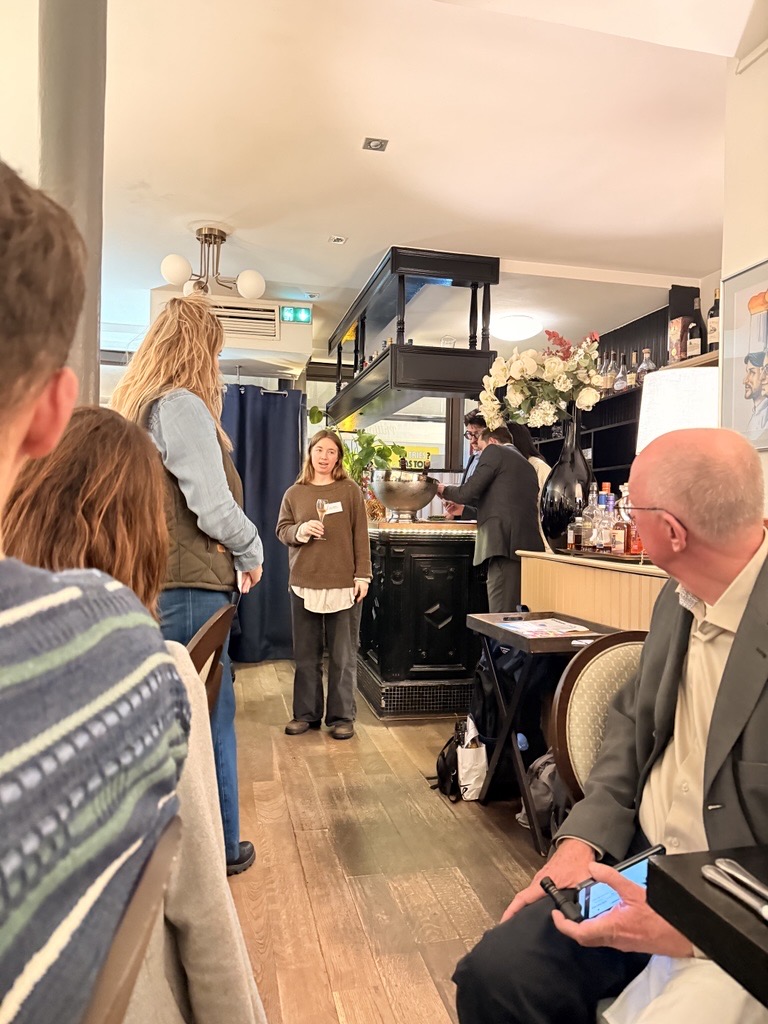
Gaining a Reputation in Europe
Taylor Stember, who was the winemaker for Living Roots in Hammondsport and has since taken on a new role at Hosmer Winery in Ovid, went on the trip this past February with the goal of making an impression about Finger Lakes and other New York wines well beyond the region.
“Being part of the Finger Lakes, it’s easy to kind of stay in the Finger Lakes,” she says. “I wanted to bring my knowledge and understanding of the Finger Lakes and reach more corners. Kind of shout from the rooftops about how proud and infatuated I am with this region,” referring to New York as a whole.
Recognizing that most of the countries they visited had long histories of winemaking that far surpassed New York State’s history, she appreciated the relevance others saw in New York wine.
“The biggest takeaway for me was the reception of New York wines and the excitement of people coming up to our booths,” Stember says.
Wine Paris, one of the wine industry’s most prestigious events, had more than 6,500 exhibitors this year. That’s a lot of competition for the attention of the expo’s trade visitors, but many of them made a point to visit New York’s booth.
“People came to our booth at Wine Paris, and said, ‘I heard New York wines are here. I’ve never had one, and I want to try one’,” she says. That’s quite different from her understanding that not too long ago, many industry members who attended trade tastings in Europe didn’t even realize New York produced wine.
Stember sees every bottle opened overseas as an opportunity to share that not only does New York produce wine, but it also produces fine wine.
“People would walk away, and they were so interested in telling their friends about New York wine that they’d bring others over to the booth,” she says. “It was amazing when they’d bring others back and say, ‘Try this wine.’”
Hybrid Curiosity
Much of Europe is behind the U.S. in embracing hybrid grapes, because historically, they haven’t needed them to make wine. But climate change has brought new disease pressures and changing growing conditions, and Europeans are increasingly open to planting hybrids.
Stember was surprised at how many people were curious about hybrids and wanted to sample wines made from them.
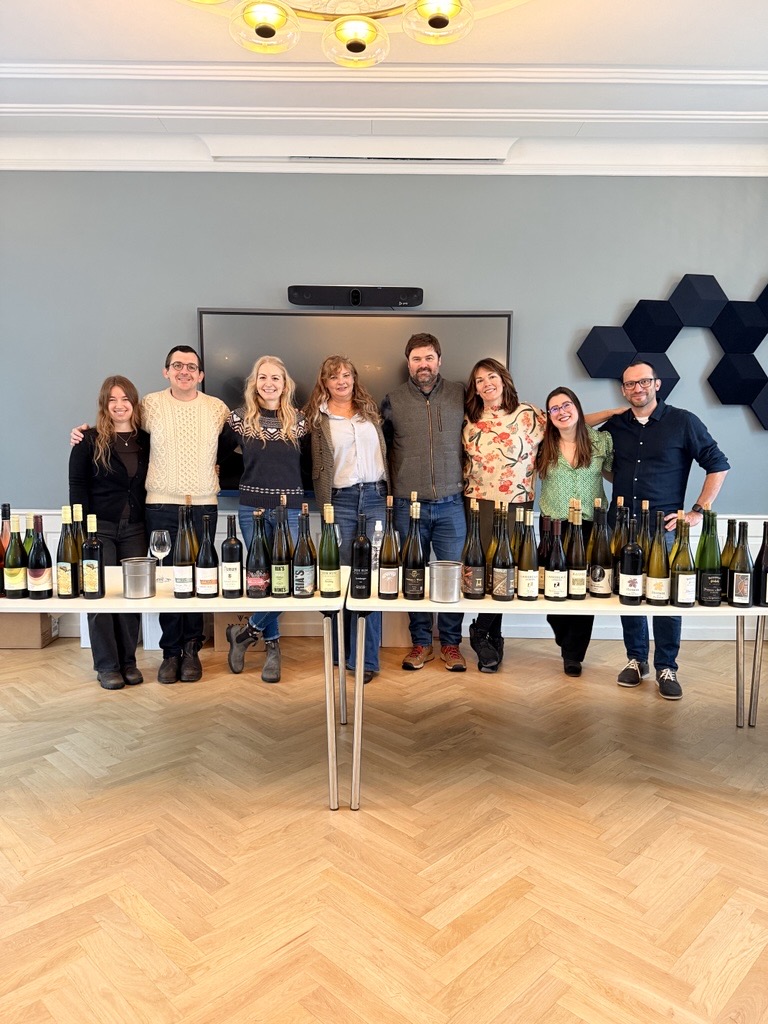
“A variety of grapes were represented,” says Casey Erdmann of Fjord Vineyards in Milton. “We even had Diamond from Thirsty Owl.” Diamond is a cross between the Concord and Iona grapes, developed in New York in the 1880s.
“It’s delicious,” she says, “and it gave us an opportunity to talk about hybrids. People loved it. And Diamond, I think, is the one exported the most of all the wines [we poured].”
Because many visitors at the various industry tastings know New York has a history with hybrids, people were “very psyched” to try wine made from them.
The Possibility of the Scandinavian Markets
The visits to Denmark and Copenhagen occurred before Paris, and Erdmann sees the actions of people who had been at those first tastings and subsequently attended Wine Paris as a measure of the team’s success in those cities.
“A lot of people from Oslo and Copenhagen came to visit us again,” she says. “A few that revisited us would bring friends over and tell them they have to taste New York wine.”
“Although more challenging and complex, the Scandinavian market appears promising to mid-scale producers,” says Erdmann. “For a company like Fjord, which produces about 3,000 cases annually, it may not be a particularly feasible business decision, but for mid-scale or larger New York State wineries, it could make considerably more sense.”
In London, Erdman felt a camaraderie with those from England. Like New York, England has made wine for many, many years, but it’s only recently that its wines have gained significant attention.
“I felt like we felt each other,” she says, noting they understood each other’s challenges.
Garnering Social Media Buzz
Jen Menges, who at the time of the trip was working as director of strategic sales at Hermann J. Wiemer in Dundee and has since taken a position as beverage education manager at New York Kitchen, went on the trip because she was confident she could sell trade tasting visitors on New York, believing the wines would be appealing in those markets since Wiemer’s wines were already in some of them.
“When you’re already in the market. It’s a great opportunity to further educate people,” she says.
Part of that education is explaining to those abroad that grapes don’t grow in New York City, a common misconception when those overseas hear the term “New York wine.” A map provided by the Export Program of New York’s wine regions helped with that, illustrating that vineyards thrive throughout many parts of the state.
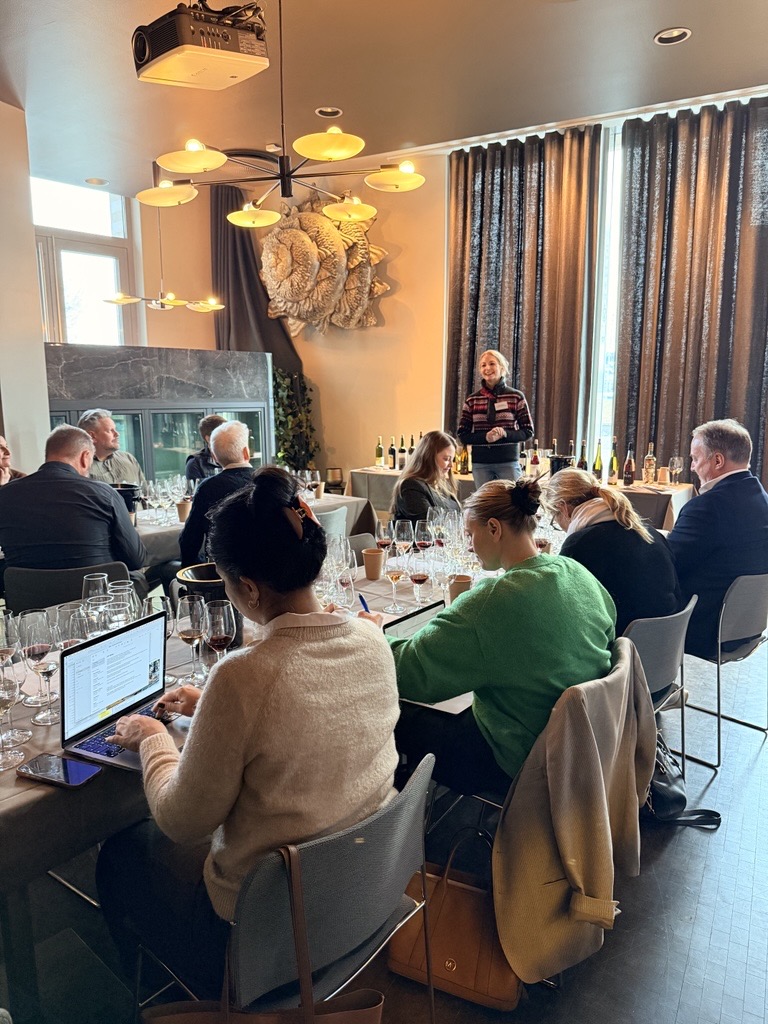
Menges was particularly pleased by the buzz New York wines had in London.
“The excitement, the genuine interest in the wines,” was what really impressed her. She was able to pour Wiemer’s wines with their distributor in London, and says, “The wines were so well received, and people were so excited about them.”
“There was so much social media buzz that came out of that day alone,” Menges says. “I was tagged in so many posts.” Those social posts, shared by wine trade professionals, likely introduced New York wine to other wine pros who weren’t able to attend the tastings.
Menges was also impressed by how the wine industry in all four countries received the New York representatives.
“Everyone was so kind and so welcoming to us,” Menges says. “Many of the producers were able to make connections that will hopefully lead to future sales. It’s hard to quantify the actual impact until the relationships are solidified, but there was a lot of interest, and I know I personally came back with a lot of contacts and waiting emails.”
NYWGF’s communications manager, Meg Hopkins, traveled with the ambassadors and recalls a moment that has stayed with her.
“At our Wine Paris booth, a German exporter pulled me aside to say that our booth felt like a family because our representatives were pouring each other’s wines, speaking knowledgeably about every region of the state, not just their own, and enthusiastically sending visitors to other New York producers at the table,” says Hopkins.
What the exporter saw was what she sees every day in the New York industry: producers genuinely championing one another.
“That’s what made this trip abroad feel like something beyond a trade mission. Our team was a family.”
She came home more excited about the future of New York wine than when she left, noting that what she saw in each city reflected what has been quietly building for a long time, and the world is absolutely taking notice.
Hopkins and her fellow ambassadors all came away with optimism about Europe’s excitement and interest in New York wines. From strengthening existing relationships to educating Europeans and getting attention on social media, the Export Program’s ambassadors see this intensive and whirlwind trade trip as a successful endeavor that could be the catalyst that gets more of New York’s wines to travel to Europe.