We’ve all heard it before: what grows together goes together. In New York, that old chestnut pays double dividends, because while the character of the wines here is shaped by the weather, even in warmer years, the aromatic varieties that thrive here manage to maintain freshness and acidity, even if they develop riper and rounder flavors and textures.
Unlike warm wine-growing regions, where grapes and growers enjoy fairly steady sunshine, the vintage variation—or the differences in a wine from one harvest year to another, from flavor and aroma to body and ABV—is significant across the Empire State, due to the changing weather from year to year.
“Vintage variation is part of the story here,” says Brittany Gibson, executive director of the Seneca Lake Wine Trail. “Each year’s weather shapes the wine. Warmer vintages bring riper fruit. Cooler years highlight freshness and minerality. It’s not inconsistency, it’s character. It’s what makes exploring Seneca Lake wines so interesting year after year.”
Why New York’s Wines Are Made To Pair With Food
New York’s climate is cool across the state—even in warmer years. The conditions create wines that are made for sipping alongside food, especially when the mercury rises.
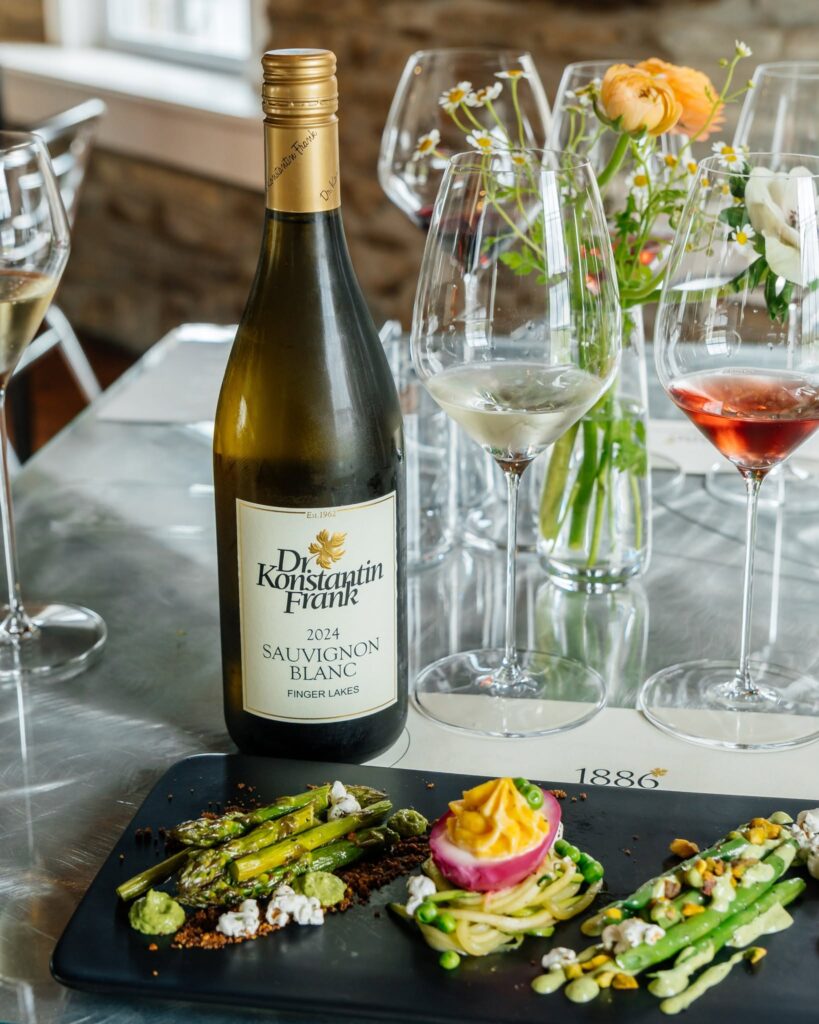
“In our cooler climate, we are focusing on aromatic varieties that naturally have higher acidity and lower alcohol,” says Meaghan Frank, who runs the winemaking operations at Dr. Konstantin Frank Winery in the Finger Lakes. “This is important so as not to overpower but actually to complement the food served alongside it. The very last thing I’m reaching for on a summer day is a 16% alcohol wine, a heavy red, or an oaky Chardonnay.”
The warm summer ripening season and cool nights in New York make for optimal ripening conditions. Grapes develop moderate acidity, complexity, and freshness, Frank explains.
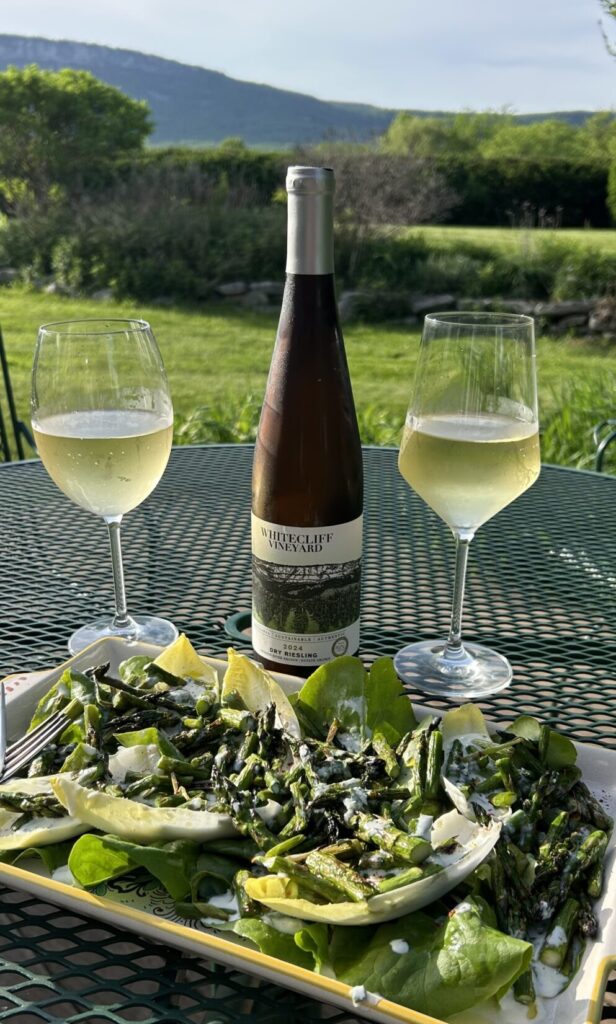
Brad Martz, winemaker at Whitecliff Winery in the Hudson Valley, concurs, saying that New York’s wines are typically fruit-forward, higher in acid, and lower in alcohol than wines made from grapes grown in warmer climates.
“During the summer, whether you are drinking something white or red, you want to drink something refreshing that makes your food more enjoyable. You don’t want to drink something heavy that fills you up,” he says.
Classic New York Food & Wine Pairings
“Cool climate wines are built for the table,” says Gibson. “Their natural acidity refreshes your palate and enhances flavors, rather than overpowering them. In the summer, that’s everything! You want wines that are crisp, vibrant, and easy to enjoy alongside lighter, seasonal foods.”
And classic, unfussy New York born-and-bred dishes.
Gibson Campbell, sales manager at Macari Vineyards on the North Fork of Long Island, is a Binghamton University alumnus, and as such, deeply devoted to chicken spiedies.
“Our 2025 Katherine’s Field Sauvignon Blanc is the perfect pairing for chicken spiedies,” Campbell says. “This dish and this wine share many similar aromas and flavors: heavy lemon and herb notes that work very well together, and ample acidity so neither outshines nor overpowers the other.”
Another regional specialty that sings with Katherine’s field is a white pizza, with local littleneck clams, Pecorino, lemon, and oregano, Campbell says.
New York reds are a pinch-hit for summer dining, too, Campbell believes.
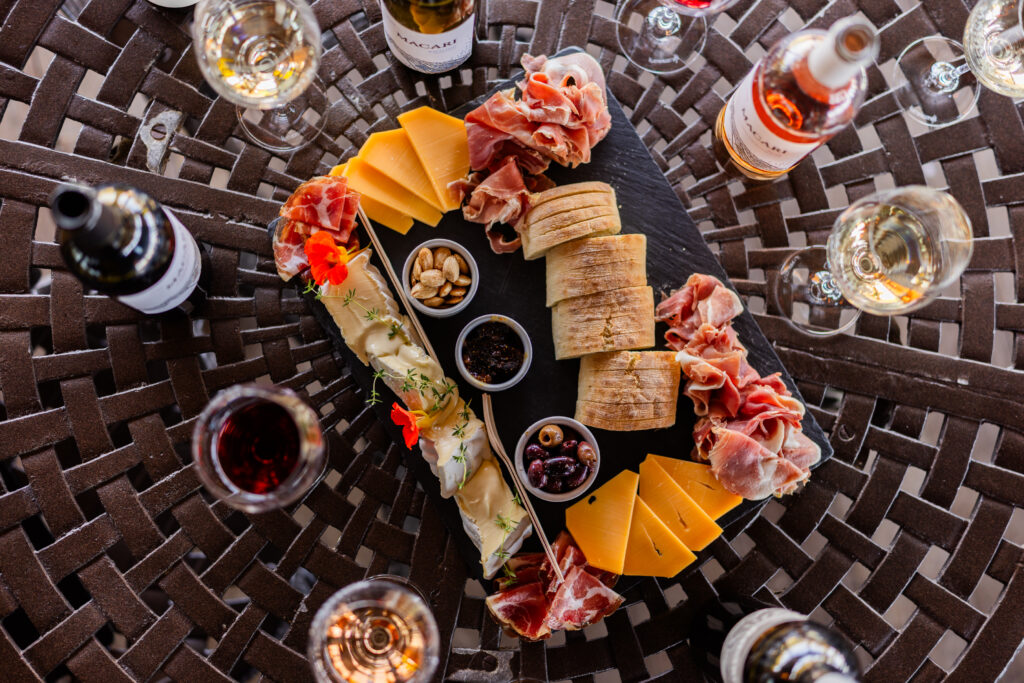
“Our long growing season provides great phenolic and sugar ripeness, yet our cool climate reins in the overripe fruit flavors common in hotter climates,” Campbell says. “Merlot grown here has, for instance, this unmistakable red cherry and tart sugar plum quality that brings freshness and energy I don’t find in most wine regions. This is a great foil for venison, pork loin, or hard cheeses, especially ones made locally at Mecox Bay Dairy.”
Frank, meanwhile, maps out her New York wine and food pairings like she’s a general plotting an assault. (We’ll accept the friendly fire, with gratitude).
“Zweigles Hot Dogs and Cabernet Franc,” she says. “Garbage plates and Dry Rosé, Pastrami Sandwiches and Blaufrankisch, and New York pizza and Merlot. For a bagel and lox, Blanc de Blanc Traditional Method.”
Cheesecake? Sparkling Riesling.
Your palate has its marching orders. Get to it!