
For New York wineries, sustainability is more than a buzzword or marketing term. It’s a practice embraced throughout the state, with grape growers and wineries planning their next sustainability goal almost immediately after the last one has been implemented. Many take an extra step: not only do they do the work in the vineyards and wine cellar to increase sustainability, but they also complete the paperwork required to become New York Sustainable Wine Growing certified.
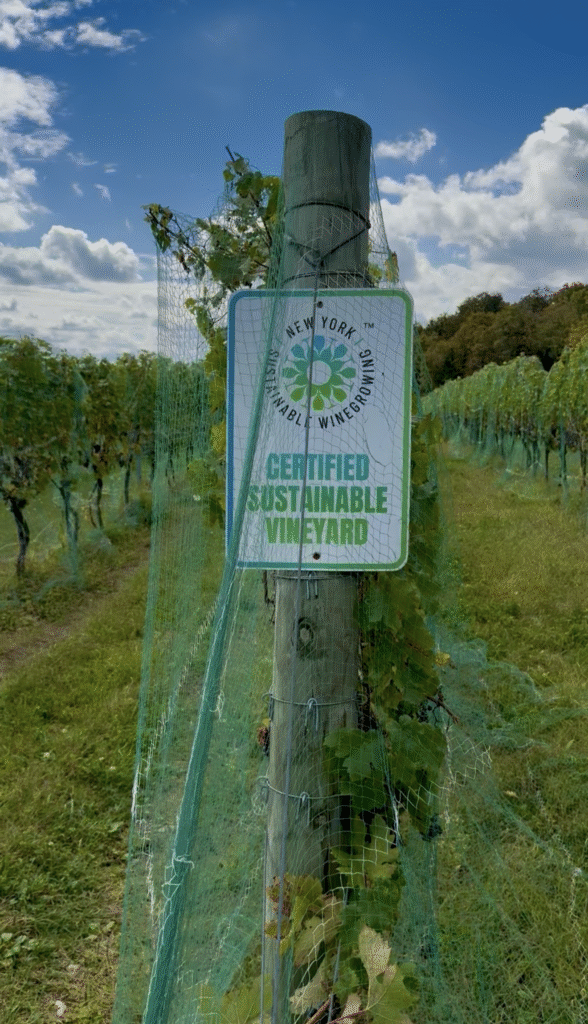
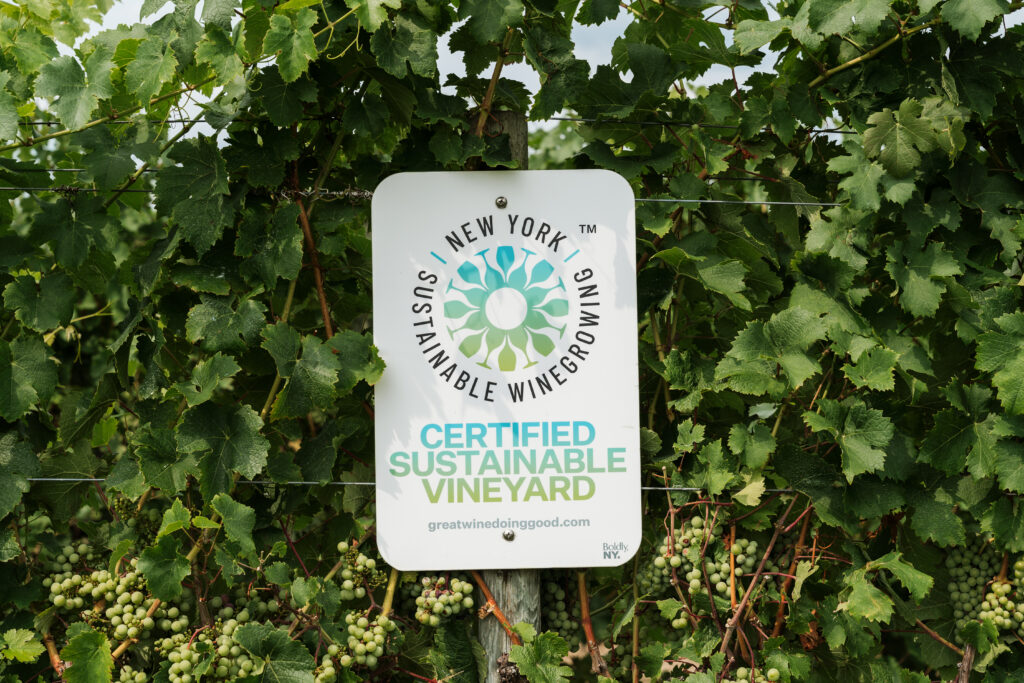
Any winery or grower can take measures to be more environmentally sound, socially equitable, and financially sustainable without going for New York’s certification—and their efforts are just as valid as those of certified wineries and vineyards. However, there is an added value to having the certification’s Trustmark logo and language on bottles, marketing materials, and posted around the tasting room: it gets the attention of consumers who increasingly want to support businesses that prioritize caring for the planet, their employees, and their communities.
“The younger generation is looking for transparency in what they drink,” says Shana Clarke, New York resident, wine journalist and writer who frequently covers sustainability in the industry. “They want to have something that feels genuine and authentic. Seals [like the Trustmark] give a sense of that.”
Clarke says that having a recognizable certification mark or seal shows consumers that there is thought behind what’s being done in the vineyards or at a winery. And as someone who has been following New York wine for decades, she’s impressed with where the Empire State’s wine industry is going with sustainability.
“If you’re showing that you’re trying. If you’re attempting to make strides. If you’re trying to figure out what’s going to work, that’s the right direction versus saying, ‘I’m not going to bother at all,’ “ says Clarke.
We spoke with three wineries that make bothering with sustainability a priority about why it’s important to them and those who enjoy their wines.
Caring for the Planet
“Sustainability is important for Milea Estate Vineyard because wine is uniquely tied to place: community, climate, soil, water, and long-term land health. A vineyard is not just an isolated factory input. It’s an ecosystem that needs to stay productive for generations,” says Darren Chertkoff, the winemaker at Milea, located in the Hudson Valley.
In his view, sustainability isn’t only being “environmentally friendly.”
There is more to it than that. For Chertkoff, it encompasses economic viability, ecological resiliency, and cultural meaningfulness, all issues that impact the surrounding community over the long term.
At Long Island’s Wölffer Estate Vineyard, the sustainable vineyard initiatives go beyond the vineyards it owns, too. Although the winery has its own vineyards, it also works with other growers to source fruit. For the Trustmark to be on bottles of Wölffer wines, those growers also need to meet certification standards.
“We wrote to the ten growers we work with that we are now part of the sustainable program, and the growers chose to work with us,” says Roman Roth, winemaker and partner at Wölffer. As a result, a combined 300 acres of vines from the growers Wölffer sources from have all chosen to increase their sustainability, in turn, increasing the impact the New York Sustainable Wine Growing certification has throughout the state.
This certification impacts the Finger Lakes region, too.
“This is our land,” says Lisa Hallgren, co-proprietor and general manager of Ravines Wine Cellars in Geneva. “We love our land. We love our region, we love our lakes, and everything is connected.”
With the end goal of making sure that everything connected is sustained for future generations, Ravines signed on to the certification, even though they’d been doing much of what’s required to earn the Trustmark for years now.
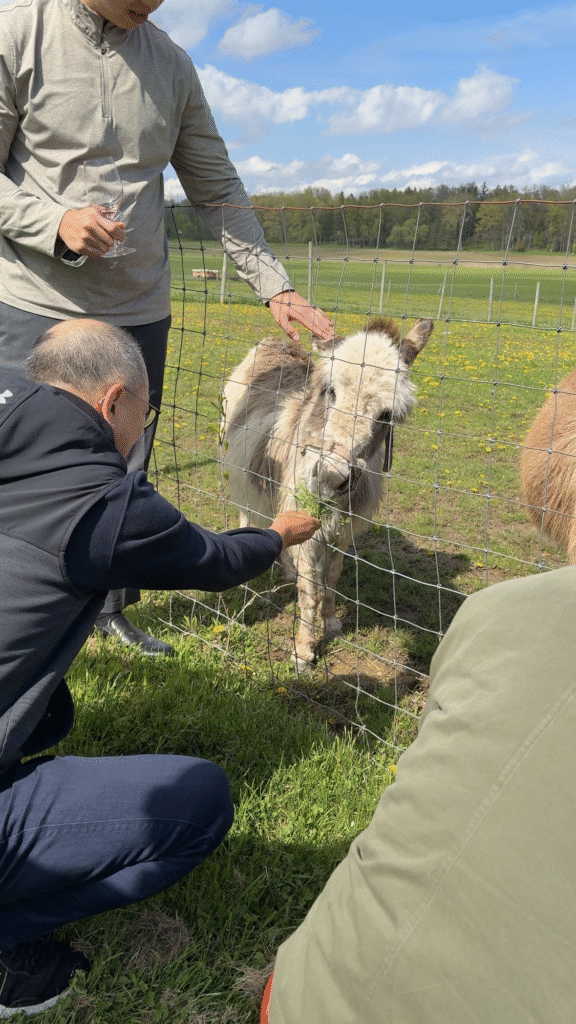
And while not every sustainable action that Ravines takes can be seen by those who visit its winery, some are, like the beekeeping or the donkeys on the property.
“The donkeys started out as a 25th anniversary present, but they evolved into an important part of our sustainability program,” says Hallgren.
The donkeys’ waste is put back into the vineyards in the form of compost, making richer, better soil, contributing to the goal of leaving healthy land for future generations.
Caring for Employees and Communities
Ensuring employees and communities are cared for is a vital part of sustainability. Employee turnover is not good for the long-term stability of employees or their employer.
Wölffer employs more than 100 people, and Roth knows that if those employees turned over too often, it would be an indication that they weren’t being cared for properly. He sees the longevity of many of the employees, including the sales manager, the housekeeper, and the vineyard manager, as a positive.
With a dedicated human resources department, plus benefits for many employees such as contributions to health insurance premiums and 401K matches, Wölffer emphasizes supporting employees.
Hallgren sees caring for employees as the right thing to do, of course, but also as important to the consistency of its winemaking. She points to the seasonal H2A agricultural workers Ravines hires from Northern Mexico each year.
“We get the same guys every year, which is super important to us,” says Hallgren.
The seasonal workers are relatives of the full-time team that manages the vineyards, so the winery’s attention to properly caring for employees goes beyond the Finger Lakes region and crosses borders, benefiting communities in two countries.
At Milea, maintaining the health of the winegrowing team is as essential as maintaining the health of its vines.
“The two go hand-in-hand,” says Chertkoff. “Milea depends heavily on people, local communities, and long-term regional consumers, not just land and climate. Winegrowing is labor-intensive and locally based. We believe the quality of our wine or hospitality experience is inseparable from the well-being of the workers and local community that support it.”
To support its employees, Milea emphasizes training and the ethical treatment of its winegrowing and winemaking staff. This helps retain skilled personnel, which in turn maintains the quality of its vineyards and wine.
Educating Consumers
How do New York’s wineries focused on sustainability let wine drinkers know what they’re doing? The Trustmark helps. It’s a visual cue of commitment to the land, the people, and the community. But education goes beyond visual cues.
“We talk about it,” says Hallgren. “When you enter our place in Geneva, we’re surrounded by fruit tree orchards. When you’re coming down the driveway, you know immediately you’re in a viticulture and agricultural area. By the time people get to our tasting room, they already feel like they’re on a farm.”
That makes it easy for employees in the tasting room to talk about their sustainability—from the donkeys to the honey produced on-site (which shows up in salted honey butter on the charcuterie boards) and the sustainable steps in the vines—with visitors.
Sustainable efforts show up in the quality of wine, too, and that’s something that can be talked about in a tasting room.
“Improved soil structure and microbial life can lead to more balanced vines. This, in turn, can produce more even ripening, better acidity balance, and greater flavor complexity in the grapes,” says Chertkoff, referring to just one of the ways sustainability improves wine quality.
Ultimately, he says, “Vine stress is reduced over time, and biodiversity may improve ecosystem balance and make vineyards more resilient to climate change. In other words, sustainable winegrowing practices can help maintain wine quality in more difficult vintages and sustain wine quality over decades.”
A quick discussion about sustainability and wine quality with a consumer who shows genuine interest certainly is educational.
But still, visual clues often help open up the opportunity for those discussions.
“As you drive in [to Wölffer], the first sign says ‘sustainably grown’ on the front of the field,” says Roth. “Then people talk about it. We have wine specialists in the tasting room. They all talk about sustainability because you can see it in the vineyard.”
Clarke thinks the sustainability message is one that New York should be vocal about because while the state’s wine reputation is getting better known globally, it’s still a small part of the wine world.
“When you’re starting from a place where name recognition is still growing, it’s such a great point to make the message about sustainability part of your story,” she says.
Increasingly, sustainability is integral to New York’s story, one that wineries are always willing to talk about.