
In the ever-evolving world of wine and grape production, research plays a crucial role in advancing knowledge, improving practices, and ensuring the sustainability of the industry. NYWGF’s commitment to research is evident in its annual research budget, which typically ranges between $350,000 to $600,000. The NYWGF Board of Directors is proud to share the results of 2024-25 funded research projects through individual reports, articles, and a series of webinars in 2025-26.

The timing of their research couldn’t be better: as the U.S. Environmental Protection Agency (EPA) refines rules for herbicide use on vineyards and farms to reduce exposure of surrounding habitats to conventional agricultural herbicides, two scientists released the results from a long-term study comparing biofungicides and conventional fungicides.
Through five years’ worth of testing and trials at Cornell Grape Pathology, Dr. Katie Gold, assistant professor at Cornell CALS, and Dr. David Combs, research support specialist at Cornell CALS, have found that when used correctly, certain biofungicides can offer disease prevention that is analogous to conventional options.
The Cornell Pathology Vineyards in Geneva, NY, represent one of the toughest testing grounds for disease control, Combs explains.
“Biofungicide trials have taken place in the Geneva AgriTech pathology vineyards for many years, with a larger focus on biologicals starting in about 2020,” Combs says. “Not only are we looking at efficacy compared to conventional materials, but we are also looking to see if they can be used in place of, as well as tank mixed with, synthetic fungicides.”
Across nine acres and nine concurrent disease trials, the research team deliberately manages these vineyards to promote disease, creating high-pressure environments ideal for rigorous fungicide testing.
The trials typically have more than 100 unique combinations of conventional, biofungicide, and mixed rotational programs. The vines are assessed to see how they perform against powdery mildew, downy mildew, and black rot.
Surprising Results
“I have been working with various pesticides for 30 years with Cornell, and some of the original biofungicides were very difficult to mix and apply, with limited efficacy at best,” Combs says. “After trialing materials in the new generation of biofungicides, not only were they similar in ease of use as conventional materials, but they also have similar efficacy as well, even better in some cases where pesticide resistance has rendered traditional classes of fungicides obsolete. We are also getting commercially acceptable broad-spectrum activity against the major season-long pathogens present in New York vineyards.”
The EPA’s proposed changes make the results of the research feel particularly urgent. One of the potential shifts, Combs says, affects the use of Mancozeb, which may be removed from the approved list of fungicides by the EPA due to concerns about post-application worker exposure. But the broad-spectrum fungicide has been used for decades across the country, especially in humid regions like New York, where fungal and oomycete diseases are prevalent.
Thankfully, Combs and Gold have found potential alternatives to Mancozeb and other conventional fungicides through time-tested trials.
The Cornell research team evaluated four mixed biofungicide-conventional programs targeting black rot, downy mildew, and powdery mildew in our New York Wine and Grape Foundation-funded Traminette vineyard, Combs says.
Combs says that the treatments differed in the timing and placement of biofungicides versus conventional chemistries:
- Biofungicides early, then conventional (B, C, B, C)
- Conventional early, then biofungicides (C, B, C, B)
- Biofungicides at critical control window, bounded by conventional (C, C, B, B, C, C)
- Conventional at critical control window, bounded by biofungicides (B, B, C, C, B, B)
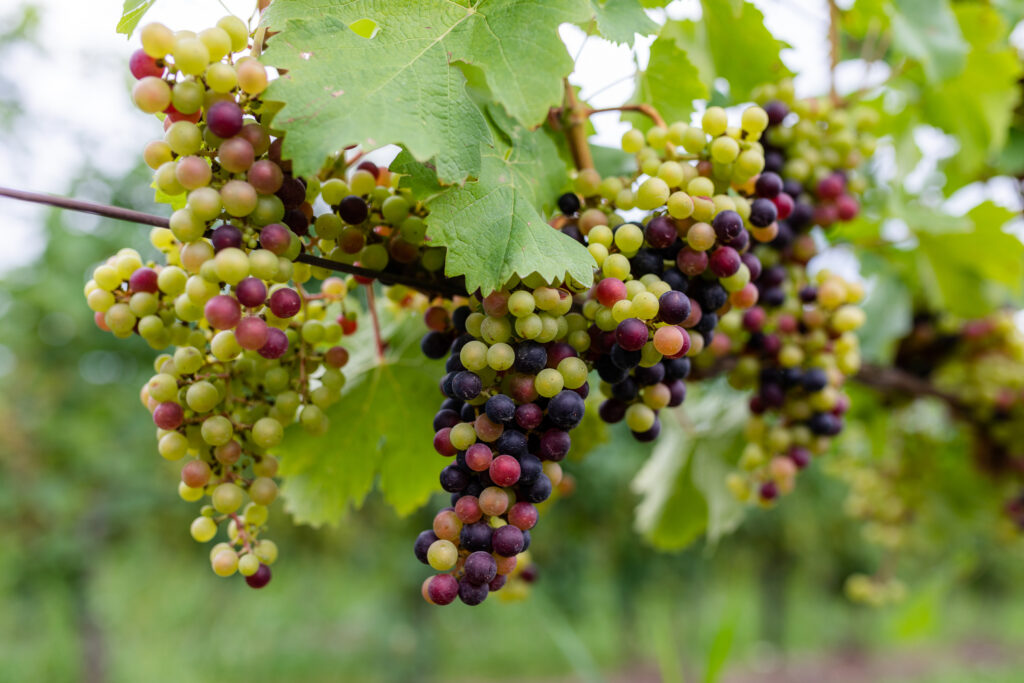
Applications followed standard phenological timing, he continues, with the “critical control” window defined as a four to five-week range from immediate pre-bloom to bunch closure. An untreated control treatment of equal size and replication was included.
“Some of the materials that have shown good efficacy in our trials include Howler EVO, which works on downy mildew, powdery mildew and black rot,” he says. “Also, Warhammer – a chitinase-based material- was a top performer against downy mildew in 2024, and we are trialing it against many other pathogens in 2025. Ecoswing, a plant-based material, has shown good efficacy against powdery mildew. Regalia and Stargus, while these materials can be used alone, we have found the best efficacy when used as a tank mix. At this point, we are not recommending any tank mixes with bios because we simply do not know enough about the interactions; however, these two materials were developed to complement each other, and should be sprayed in tandem for the best results.”
After five years of analysis, the research shows that mixed programs performed as well as conventional-only programs, and much better than untreated controls. The best-performing mixed programs included five biofungicide applications per season, alternative biofungicides every other spray, and use of biofungicides throughout or specifically during critical control periods.
Biofungicides are not a silver bullet, Combs says.
“I think that all the biofungicides are a tool in the box of pest control,” he says, “Areas with specific diseases may be able to use products that don’t work well in other areas for a multitude of reasons. Whether it’s microclimate, grape varietal, trellis style, or overall disease pressure. Any of these factors, and others, could result in a material having better performance than others. What I can say is that the disease pressure in our test vineyards is well above and beyond what any commercial vineyard will ever have, so if it performed well in our conditions, it is likely to perform well in others.”
Other Real-Life Vineyard Experiments
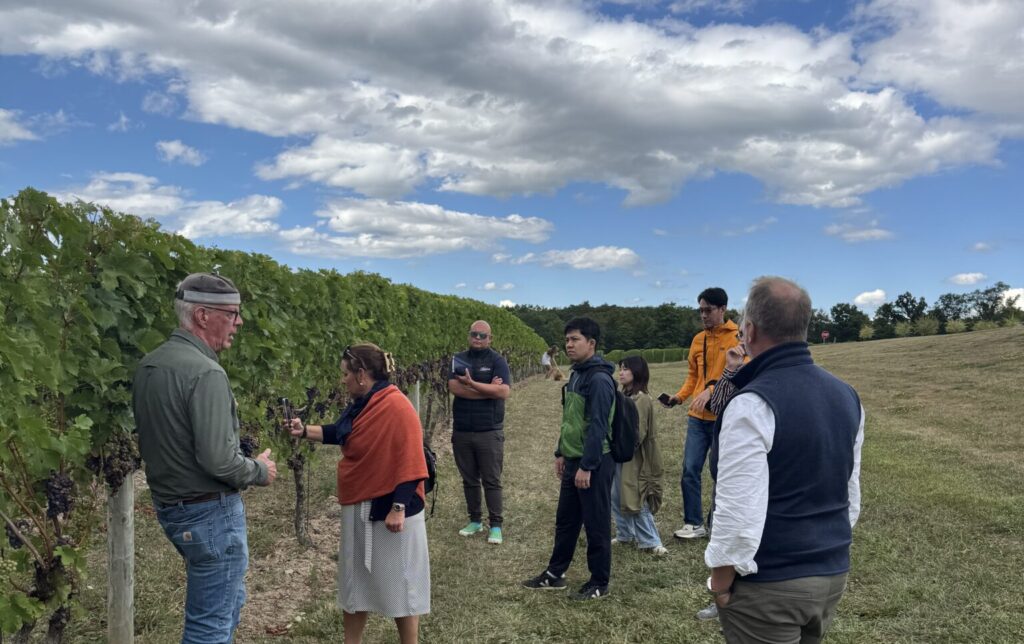
Sustainably minded business owners like Bruce Murray at Boundary Breaks Vineyard in Lodi are as thrilled by the promise of bio-fungicides as they were initially skeptical. Murray set up his own trial in 2022.
“We started using bio-fungicides in a small test area of our vineyard in 2022,” Murray says. “We did extensive research on the materials and their mode of action. It is a very complex undertaking to understand what each bio-pesticide’s mode of action is reported to be, and then whether or not it actually performs that way in your own vineyard.”
In 2023, Boundary Breaks continued with a hybrid approach, expanding the trial section of the vineyard, and only using bio-pesticides in one area and a combination of bio-pesticides and conventional pesticides in another area. The results were mixed.
“2022 was very hot and dry and so the disease pressure was very light,” he says. “In conditions like these, the bio-pesticide trial worked just as well as the conventional program. 2023 was more challenging, although with more disease pressure than 2022. In 2023, the bio-pesticide section failed to prevent some infections, particularly downy mildew, which is historically the biggest challenge in this region, along with powdery mildew.”

In other words, under conditions of low disease pressure, many of the bio-pesticides will work. Under severe disease pressure conditions, very few, if any, will work. Murray is concerned about the potential of a ban in this context. But he hasn’t given up hope.
“We need some alternatives that are comparably cost-effective,” he says. “At the present time, we do not have an easy answer for this. So we need to continue experimenting. We need to use bio-pesticides experimentally in combination with conventional materials, specifically in an effort to have alternatives to conventional pesticides that could be banned in the near- to medium-term.”
There’s no doubt in Combs’ mind that plenty of progress has been made, but a lot more needs to be done.
“I think this is a big win for the sustainability of the New York grape industry,” Combs says. “Not only are we reducing the amount of synthetic chemistries we are putting into the environment, but we are also reducing the risk of exposure to humans as well, whether that be the applicator, vineyard employee or the end consumer, the benefits far outweigh the risks. At least in the near future, I don’t think that we will ever be able to completely sever the tie to synthetic chemistries, but having these materials available is a very solid start.”